How to Choose: 15 vs 30 Year Mortgage in 2026
Table of Contents
- Understanding the Basics of a 15 vs 30 Year Mortgage
- Interest Rates: A Key Difference When Choosing a 15 vs 30 Year Mortgage
- Monthly Payments: Comparing 15 vs 30 Year Mortgage Options
- Total Interest Paid: The Long-Term Cost of a 15 vs 30 Year Mortgage
- Benefits of a 15 Year Mortgage
- Benefits of a 30 Year Mortgage
- Refinancing Considerations for a 15 vs 30 Year Mortgage
- Factors to Consider When Choosing Between a 15 vs 30 Year Mortgage
- Impact of Economic Conditions on a 15 vs 30 Year Mortgage
- Mortgage Loan Qualification
- How to Analyze Your Financial Situation for a 15 vs 30 year mortgage
- Frequently Asked Questions About 15 vs 30 year mortgage
- The Bottom Line on 15 vs 30 year mortgage
Understanding the Basics of a 15 vs 30 Year Mortgage
Navigating the home-buying process in 2026 involves countless decisions. One of the most critical is choosing between a 15 vs 30 year mortgage. This decision significantly impacts your monthly payments, interest paid over the life of the loan, and overall financial health. Understanding the differences is crucial.
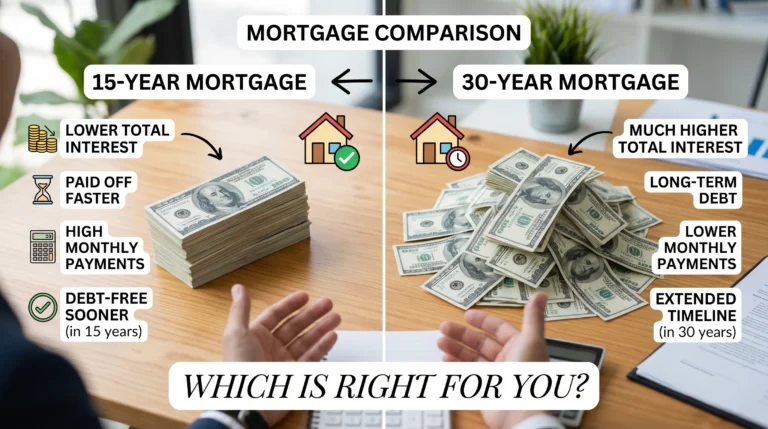
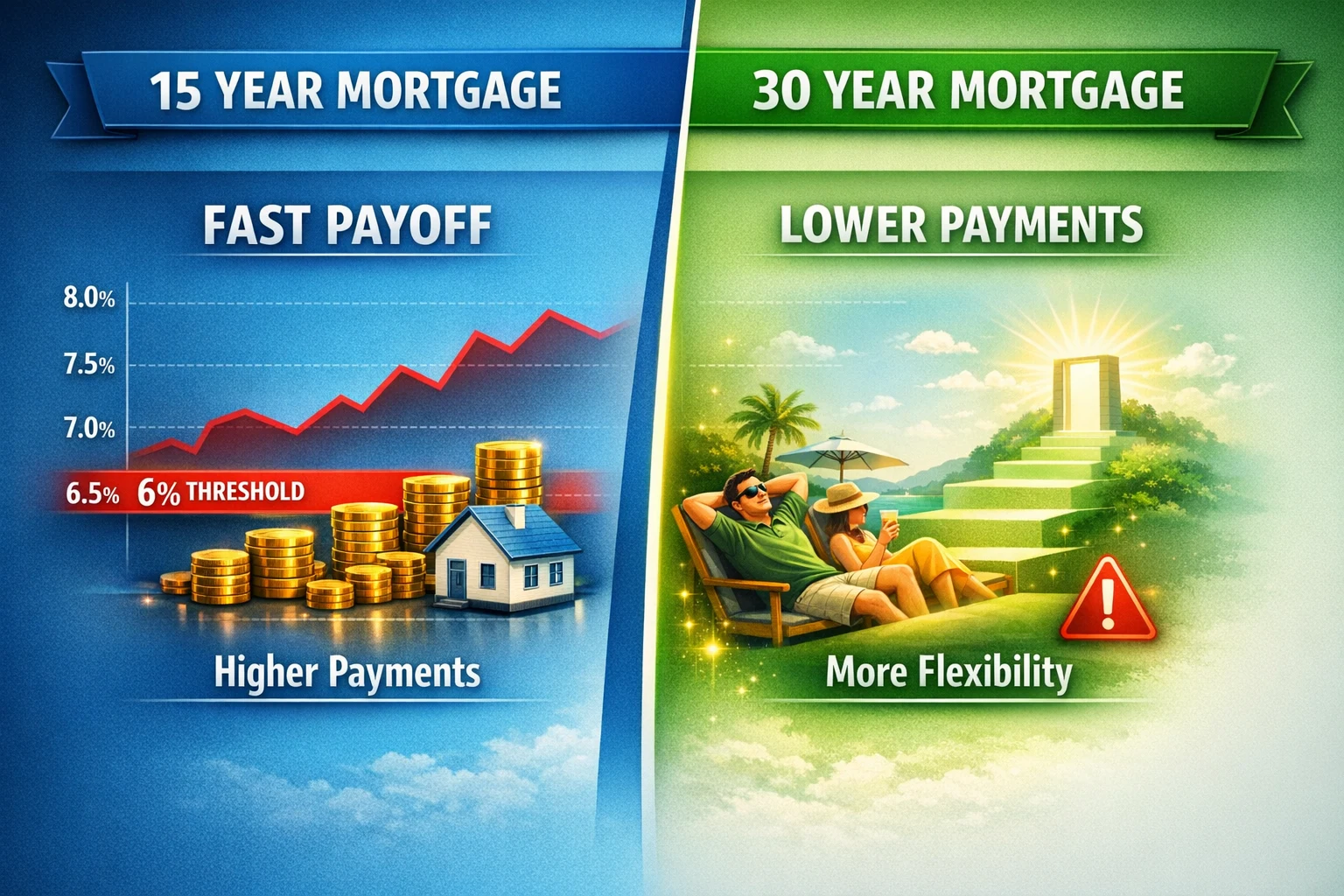
The core distinction lies in the repayment period. A 15-year mortgage offers a shorter repayment term, which typically leads to lower interest rates and faster equity building. Conversely, a 30-year mortgage spreads out the payments over a longer period, resulting in lower monthly payments but higher overall interest costs. There is no one-size-fits-all answer; the optimal choice depends on your individual circumstances.
Interest Rates: A Key Difference When Choosing a 15 vs 30 Year Mortgage
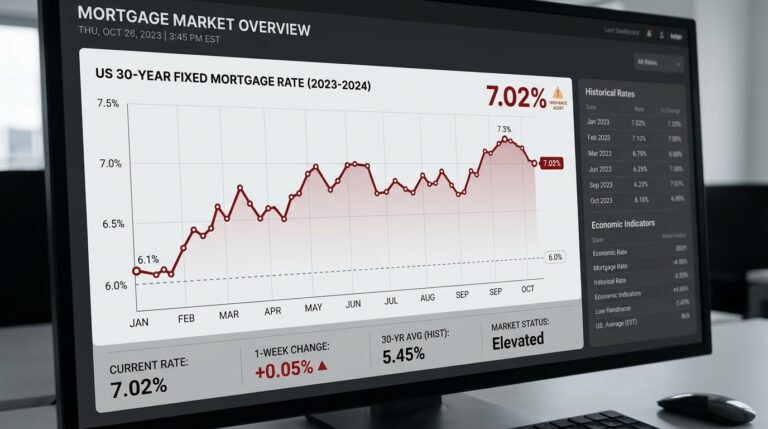
Interest rates are a pivotal factor when comparing a 15 vs 30 year mortgage. Generally, 15-year mortgages come with lower interest rates than their 30-year counterparts. This is because lenders perceive them as less risky, given the shorter repayment period. Lower rates mean you’ll pay less in interest over the life of the loan. However, smaller differences in percentage can translate to huge financial differences.
For example, a 1% difference in interest rates on a $300,000 loan can save you tens of thousands of dollars over 15 years. It’s essential to shop around and compare rates from multiple lenders. Furthermore, consider the impact of interest rate fluctuations on your long-term financial plan. Remember to compare the Annual Percentage Rate (APR) when analyzing different mortgage options.
The Impact of Interest Rate on Total Costs
The interest rate directly affects the total amount you’ll repay. Higher interest rates translate to more money paid to the lender. Consider this a significant aspect while evaluating a free financial calculator tool to simulate different interest rate scenarios.
Monthly Payments: Comparing 15 vs 30 Year Mortgage Options
The most immediately noticeable difference between a 15 vs 30 year mortgage is the monthly payment amount. A 15-year mortgage typically has a higher monthly payment than a 30-year mortgage for the same loan amount. However, you’ll build your home equity faster with a shorter repayment term.
This is because you’re paying off the principal balance more rapidly. A higher monthly payment requires a more significant budget since it impacts your cash flow. If you opt for a 15-year mortgage, the higher payments reduce the risk of debt accumulation. Additionally, the lower monthly payments in a 30-year mortgage increases your cash flow.
Monthly Payment Comparison
Let’s use an example to illustrate this. If you borrow $300,000 at a 6% interest rate:
- A 15-year mortgage: The monthly payment will be approximately $2,531.
- A 30-year mortgage: The monthly payment will be approximately $1,799.
These figures represent only the principal and interest (P&I) payments and do not include property taxes, homeowners insurance, or any other fees. As such, the 30-year mortgage appears more financially manageable on a month-to-month basis, whereas the 15-year mortgage will require a more rigid budget.
Total Interest Paid: The Long-Term Cost of a 15 vs 30 Year Mortgage
While the monthly payment is a crucial factor, the total interest paid over the life of the loan is another cost aspect of a 15 vs 30 year mortgage. A 15-year mortgage usually involves lower overall interest costs. This is because you repay the principal faster, and the interest accrues over a shorter period. A significantly shorter time frame means less money paid to the lender in the long run.
In contrast, a 30-year mortgage leads to considerably higher interest payments. Over three decades, the interest can add up to a substantial sum. However, the extended repayment period can make homeownership more accessible, especially for those with budget constraints. Therefore, assess all elements to make an informed decision.
Interest Payment Comparison
Continuing with the previous example and using the same numbers, the total interest paid would be:
- 15-year mortgage: Approximately $155,593.
- 30-year mortgage: Approximately $347,758.
In this example, the borrower would pay approximately $192,165 less interest with the 15-year mortgage. This underscores the substantial long-term financial benefits of a shorter loan term.
Benefits of a 15 Year Mortgage
A 15-year mortgage offers several key advantages. Perhaps the most significant is the lower interest rate, as we’ve discussed. This can result in considerable savings over the life of the loan. Furthermore, you build equity in your home more quickly, which can be useful for various financial strategies and planning.
Another benefit is the potential to pay off your mortgage sooner. Being debt-free earlier gives you more financial freedom and flexibility. Furthermore, it results in peace of mind by eliminating large monthly payments. This is an excellent option for those comfortable with higher monthly expenses and focused on long-term financial security. Moreover, a 15-year mortgage can be a good option for improving your credit tips.
Key Benefits Summarized
- Lower interest rate.
- Faster equity buildup.
- Earlier payoff of your mortgage.
- Potential for substantial long-term savings.
- Reduced financial risk in the long run.
Benefits of a 30 Year Mortgage
A 30-year mortgage offers its own set of advantages. The key benefit is the lower monthly payment, making homeownership more accessible for many people. This can free up cash for other expenses, investments, or savings goals. It provides flexibility in managing your budget and overall finances.
Furthermore, a 30-year mortgage can be helpful if you anticipate needing extra cash flow in the future. The longer term can also be advantageous if you have a lower credit score and need more time to establish repayment history. The 30-year mortgage can be a great option for supporting career and jobs opportunities.
Key Benefits Summarized
- Lower monthly payments.
- Improved cash flow.
- Greater affordability.
- Financial flexibility.
- Ease of qualification for prospective homeowners.
Refinancing Considerations for a 15 vs 30 Year Mortgage
Refinancing is an option to consider regardless of whether you choose a 15 vs 30 year mortgage. You might refinance your mortgage to obtain a lower interest rate, change your loan term, or tap into your home equity. Refinancing can be particularly advantageous if interest rates drop during your loan term.
If you have a 30-year mortgage, you can refinance to a 15-year term. This can reduce your total interest costs and accelerate your equity buildup. It’s essential to assess the costs associated with refinancing, such as fees and closing costs. Therefore, evaluate whether the savings justify the expenses before committing to a refinance.
Refinance Scenario
Let’s say you’ve had a 30-year mortgage for five years. After five years, you have several choices. You can stay the course, refinance to another 30-year mortgage, or refinance to a 15-year mortgage. Evaluate the difference between monthly payments for these actions.
Factors to Consider When Choosing Between a 15 vs 30 Year Mortgage
Several factors will influence your decision when selecting between a 15 vs 30 year mortgage. Consider your current and future income, your other debts, and your overall financial goals. Do you want to build equity quickly, or do you prioritize affordable monthly payments?
Your risk tolerance is also central. Are you comfortable with higher monthly payments in exchange for lower interest rates and faster equity buildup? Furthermore, evaluate your job security and long-term financial stability. A stable financial situation is essential to support the higher payments of a 15-year mortgage. Moreover, consider taking advantage of tools for free financial calculators.
Here’s a comparison table to help visualize the differences:
| Factor | 15-Year Mortgage | 30-Year Mortgage |
|---|---|---|
| Interest Rate | Typically Lower | Typically Higher |
| Monthly Payment | Higher | Lower |
| Total Interest Paid | Lower | Higher |
| Equity Buildup | Faster | Slower |
| Risk | Potentially Higher (In Terms of Monthly Payments) | Potentially Lower (In Terms of Monthly Payments) |
Impact of Economic Conditions on a 15 vs 30 Year Mortgage
Economic conditions influence the attractiveness of both a 15 vs 30 year mortgage. Factors such as interest rates, inflation, and the overall economic landscape can affect your mortgage costs and homeownership goals. Fluctuations in interest rates can change the appeal of each mortgage option.
When interest rates are low, a 15-year mortgage becomes very enticing, as you can secure a low rate and pay off your mortgage quickly. During periods of high inflation, the longer term of a 30-year mortgage might be beneficial. However, in times of economic uncertainty, assess the impact of these conditions on your income and property value. Therefore, staying informed about economic trends will help your decision.
Mortgage Loan Qualification
The qualification process for both 15-year and 30-year mortgages is similar, though there will be differences in underwriting standards. Lenders assess your creditworthiness, income, and debt-to-income ratio (DTI). A better credit score often unlocks lower interest rates. Therefore, make sure you know what is required to qualify.
Lenders also evaluate your debt-to-income ratio, which measures how much of your monthly income goes toward debt payments. A lower DTI is beneficial. The more stable your income and employment history, the better your chances of getting approved. It’s usually the same process to qualify for both mortgages. Always know your eligibility.
Requirements:
- Credit Score: A good credit score is central to all loan applications.
- Income Verification: Lenders will want documented proof of your income.
- Debt-to-Income Ratio (DTI): A lower DTI is better for approval.
- Employment History: Length of employment and stability are essential.
How to Analyze Your Financial Situation for a 15 vs 30 year mortgage
Conduct a thorough financial analysis to determine which mortgage term is best. Evaluate your budget, including your income, expenses, and debts. Consider how the monthly payments of each mortgage option will affect these numbers. To assess your financial situation, project your income and expenses over the next 15 or 30 years. What circumstances do you anticipate?
Review your savings and investment goals. Remember your risk tolerance when comparing the 15 vs 30 year mortgage scenarios. Consider how each option will impact your ability to meet these goals. Furthermore, consult with a financial advisor to gain personalized guidance. A financial advisor can steer you in the right direction.
Frequently Asked Questions About 15 vs 30 year mortgage
What are the main differences between a 15-year and a 30-year mortgage?
The principal differences are the repayment term, monthly payment amount, and total interest paid. A 15-year mortgage has a shorter term, higher monthly payments, and lower total interest. A 30-year mortgage has a longer term, lower monthly payments, and higher total interest.
Does a 15-year mortgage have a lower interest rate?
Yes, 15-year mortgages typically have lower interest rates than 30-year mortgages. This is because lenders consider 15-year mortgages less risky, as they are repaid more quickly. These rates significantly impact the total amount of interest paid over the life of the loan.
How does a 30-year mortgage impact my monthly payments?
A 30-year mortgage results in lower monthly payments compared to a 15-year mortgage. This can make homeownership more affordable in the short term, but it also means you’ll pay more interest and take longer to build equity in your home.
What are the benefits of a 15-year vs a 30-year mortgage?
A 15-year mortgage gets lower interest rates and faster equity building. A 30-year mortgage provides lower monthly payments, which means more accessible homeownership and increased cash flow. The choice depends on your financial goals and risk tolerance.
Which mortgage term is best for my financial situation?
The “best” mortgage term depends on your individual financial circumstances. A 15-year mortgage may be better if you can afford the higher payments and want to save on interest. If you want lower monthly payments, a 30-year mortgage might be the better option. Always consult with a financial advisor.
The Bottom Line on 15 vs 30 year mortgage
Choosing between a 15 vs 30 year mortgage is a pivotal decision when buying a home. Both options have benefits and drawbacks. A 15-year mortgage offers lower interest rates and faster equity building but requires higher monthly payments. A 30-year mortgage provides lower monthly payments but comes with a higher total interest cost. Your specific financial situation, risk tolerance, and long-term goals should guide your choice. Therefore, research options and consult a financial advisor for personalized advice. Ultimately, the best decision aligns with your resources and the stability of your future. A well-informed decision helps you on the path to financial stability and prosperity.
Similar Posts
How to Refinance Your Mortgage and Save $300 a Month
If your current mortgage rate is above 5%, you could be throwing away hundreds of dollars every month. The average homeowner who refinanced in early 2026 saved
What Are Closing Costs and How to Reduce Them
When you’re buying a home, the down payment isn’t the only cash you’ll need at closing. Closing costs typically add 2% to 5% to your home’s purchase price, whic
First-Time Homebuyer Grants and Programs in 2026
Buying your first home in 2026? You’re not alone. With mortgage rates stabilizing and new homebuyer programs rolling out, it’s one of the best years in a decade
7 Mortgage Rate Forecasts for 2026: What to Expect
Table of Contents Understanding the Mortgage Landscape: A 2026 Overview Key Economic Influences on Mortgage Rates 2026 Forecast Expert Mortgage Rates 2026 Forecast Scenarios Factors Driving What Are Mortgage Rates Doing In 2026 Preparing for the Mortgage Rates 2026 Forecast Strategic Planning for Your 2026 Mortgage Needs Actionable Steps: Your 2026 Mortgage Plan Conclusion: Navigating…
How to Choose Between a 15-Year vs. 30-Year Mortgage
Table of Contents Understanding the 15 vs 30 Year Mortgage Basics The Financial Impact of a 15 vs 30 Year Mortgage Benefits and Drawbacks: 15 vs 30 Year Mortgage Key Factors for Your 15 vs 30 Year Mortgage Decision The True Cost: A 15 Year Versus 30 Year Mortgage Comparison Navigating Current Market Conditions for…
Home Equity Loan vs HELOC: Which Should You Choose?
If you’re a homeowner sitting on equity, you’ve got options to tap into that value. Two of the most common are home equity loans and home equity lines of credit