
How to Choose Between a 15-Year vs. 30-Year Mortgage
Table of Contents
- Understanding the 15 vs 30 Year Mortgage Basics
- The Financial Impact of a 15 vs 30 Year Mortgage
- Benefits and Drawbacks: 15 vs 30 Year Mortgage
- Key Factors for Your 15 vs 30 Year Mortgage Decision
- The True Cost: A 15 Year Versus 30 Year Mortgage Comparison
- Navigating Current Market Conditions for Your Mortgage Choice
- Making the Right Choice: A Step-by-Step Action Plan
- Conclusion: Your Best 15 vs 30 Year Mortgage Path
- FAQs About 15 vs 30 Year Mortgage
When purchasing a home, understanding the differences between a 15 vs 30 year mortgage is absolutely crucial for your long-term financial health. This choice profoundly impacts your monthly payments, total interest paid, and ultimately, your financial freedom. Making an informed decision now can save you tens or even hundreds of thousands of dollars over the life of your loan. Therefore, this ultimate guide will demystify the options and provide clear insights.
Understanding the 15 vs 30 Year Mortgage Basics
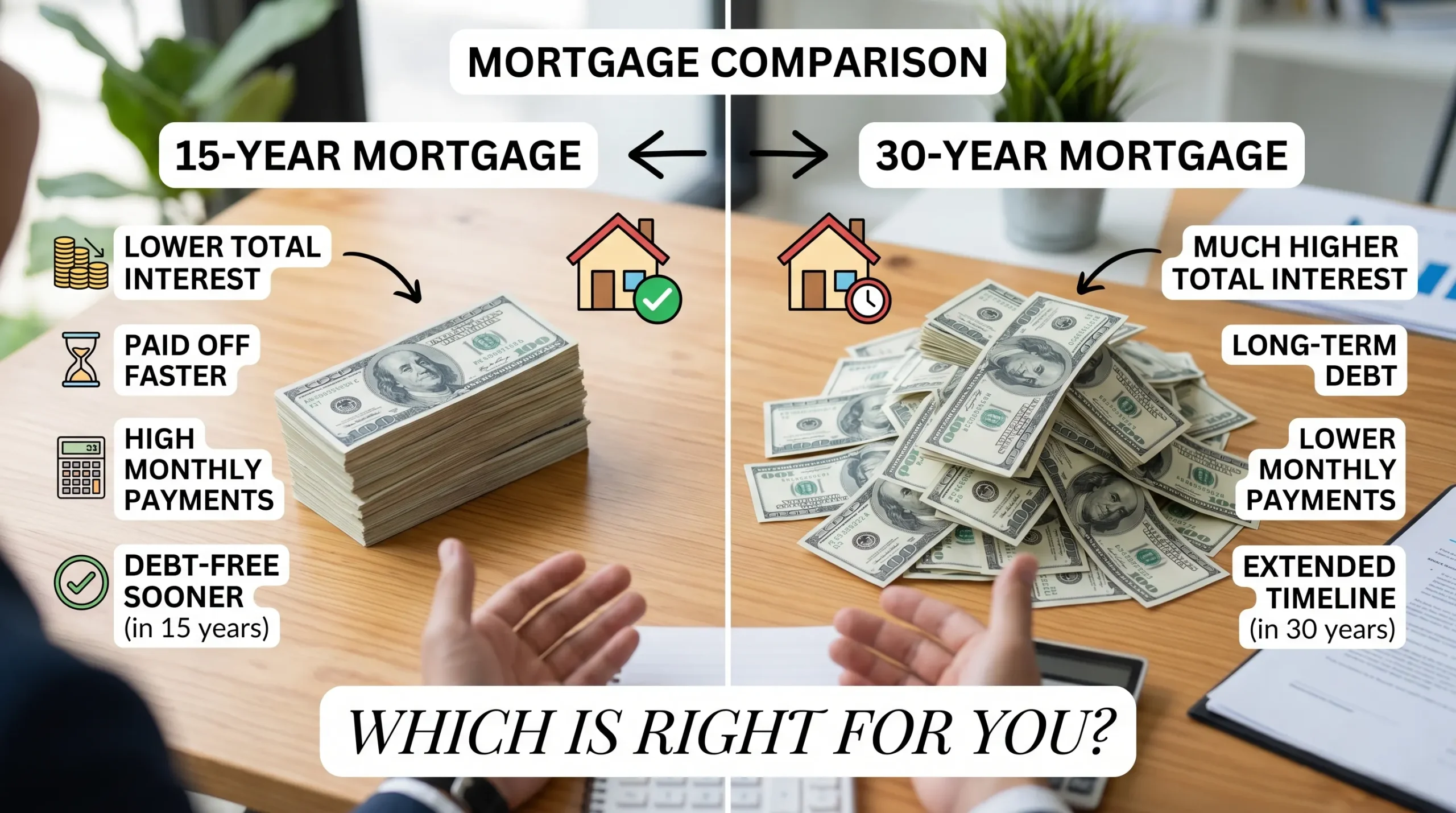
The term of your mortgage dictates how long you have to repay the loan. Essentially, a 15 vs 30 year mortgage refers to the agreed-upon timeframe for your repayment schedule. A 15-year mortgage is a shorter-term loan, requiring larger monthly payments but saving you significant interest over time. Conversely, a 30-year mortgage offers lower monthly payments, which can be more manageable for many homeowners, though it accrues substantially more interest historically.
Lenders offer various mortgage terms, but 15-year and 30-year fixed-rate mortgages are the most common. A fixed-rate mortgage means your interest rate remains the same for the entire loan term. This stability provides predictable monthly payments, which is a major advantage for budgeting. It is vital to consider your current financial situation before committing. Many people struggle with this decision, and it is perfectly understandable.
What is a 15-Year Mortgage?
A 15-year mortgage involves paying off your home loan in half the time of a standard 30-year loan. This accelerated payment schedule means your principal balance reduces much faster. Moreover, 15-year mortgages typically come with lower interest rates compared to their 30-year counterparts. These lower rates stem from the reduced risk for lenders, as they get their money back sooner. However, the trade-off is a significantly higher monthly payment. You should carefully evaluate if these higher payments are sustainable for your budget. This option is often attractive to those with stable, higher incomes.
What is a 30-Year Mortgage?
A 30-year mortgage spreads your loan repayment over a longer period, resulting in lower monthly payments. This makes homeownership more accessible and budget-friendly for a wider range of individuals and families. While the monthly payments are smaller, you end up paying substantially more interest over the loan’s duration. The interest rate on a 30-year mortgage is generally higher than that of a 15-year loan. This reflects the increased risk lenders undertake when extending credit for a longer period. It’s a popular choice due to its affordability and flexibility. Your decision on a 15 vs 30 year mortgage largely depends on these core differences.
The Financial Impact of a 15 vs 30 Year Mortgage
When comparing a 15 vs 30 year mortgage, the financial implications are profound. Your ultimate choice will affect your cash flow, total expenditure, and wealth-building potential. It is not just about the monthly payment; it’s about the bigger picture. Therefore, a thorough understanding of these impacts is paramount. Many financial experts advise looking beyond immediate affordability.
Monthly Payment Differences
The most immediate and noticeable difference between a 15 vs 30 year mortgage lies in the monthly payment. A 15-year mortgage will always have higher monthly payments because you are compressing 30 years of payments into half the time. For example, a $300,000 loan at a 7% interest rate (average for 2026) would have vastly different payments. The 15-year payment might be around $2,696, while the 30-year payment for the same loan could be about $1,996. This difference of over $700 monthly can significantly impact your budget. Always use a free financial calculators to compare precise numbers.
Total Interest Paid Over Time
The total interest paid is where the 15 vs 30 year mortgage comparison really shines for the shorter term. Due to the reduced principal, quicker repayment, and lower interest rate, a 15-year mortgage saves a massive amount on interest. Using our previous example ($300,000 at 7%):
- 15-Year Mortgage: Total interest paid approximately $185,280.
- 30-Year Mortgage: Total interest paid approximately $418,560.
This is a staggering difference of over $230,000 in interest alone! This substantial saving highlights a primary advantage of the 15-year option. Paying less interest means more of your money goes towards equity. It’s a powerful argument for the 15-year option if you can manage the payments. The long-term savings are truly remarkable.
Benefits and Drawbacks: 15 vs 30 Year Mortgage
Every financial decision has its pros and cons, and deciding between a 15 vs 30 year mortgage is no exception. Weighing these carefully against your personal financial situation is key. There is no one-size-fits-all answer, so consider what aligns best with your goals. Furthermore, circumstances can change, so flexibility is often valued.
Advantages of a 15-Year Mortgage
- Significant Interest Savings: As discussed, you save a substantial amount on interest over the life of the loan. This is the biggest draw for a 15 vs 30 year mortgage.
- Faster Equity Build-Up: Your principal balance decreases more rapidly, building equity in your home much quicker. This is a tremendous advantage for wealth accumulation.
- Debt-Free Sooner: You become completely debt-free in half the time, offering earlier financial freedom and peace of mind. Imagine living without a mortgage payment!
- Lower Interest Rates: Lenders typically offer lower interest rates on 15-year terms, further enhancing your long-term savings. This reduced risk for the lender benefits you.
Disadvantages of a 15-Year Mortgage
- Higher Monthly Payments: This is the primary hurdle for many. The larger payments can strain your budget, especially if unexpected expenses arise. For example, a significant car repair.
- Less Financial Flexibility: With higher fixed payments, you have less discretionary income each month. This can limit savings, investments, or emergency fund contributions. It might impact your ability to pursue other financial goals.
- Reduced Liquidity: More of your cash flow is tied up in your mortgage payment, potentially leaving less available for other investments or emergencies. Liquidity is critical for financial health.
Advantages of a 30-Year Mortgage
- Lower Monthly Payments: This is the biggest advantage, making homeownership more affordable and accessible for many. This can free up cash for other uses.
- Greater Financial Flexibility: Lower payments mean more disposable income for other financial goals, such as saving for retirement, investing, or building an emergency fund. This flexibility is often highly valued.
- Reduced Payment Stress: The lower monthly obligation can reduce financial stress, making it easier to weather unexpected economic downturns or job changes. It provides a larger safety net.
- Potential for Investment: The money saved on monthly payments compared to a 15-year mortgage can be invested elsewhere, potentially yielding higher returns than the interest saved by the 15-year option. This only works if you actually invest the difference.
Disadvantages of a 30-Year Mortgage
- Significantly More Interest Paid: This is the main drawback, totaling hundreds of thousands of dollars more over the life of the loan. It’s truly a substantial amount.
- Slower Equity Build-Up: You build equity at a much slower pace due to the extended term and higher interest payments in the early years. This can delay wealth creation.
- Longer Debt Commitment: You remain in debt for a longer period, sometimes well into retirement. This extended obligation can be a burden.
- Higher Interest Rates: Lenders typically charge higher interest rates for 30-year terms due to the increased risk over a longer period. This adds to the overall cost.
Key Factors for Your 15 vs 30 Year Mortgage Decision
Choosing between a 15 vs 30 year mortgage requires a careful evaluation of several personal and financial factors. Your situation is unique, so what works for one person may not work for another. Consider these points thoroughly to make the best choice. This critical decision impacts your financial future significantly.
Your Current Income and Job Stability
Your income level and job security are paramount. If you have a high, stable income and feel confident about your long-term employment, a 15-year mortgage might be manageable. However, if your income fluctuates, or your job stability is uncertain, a 30-year mortgage with lower payments offers a more comfortable safety net. Future income potential should also be considered. A sudden job loss would be less devastating with lower mortgage payments.
Your Debt-to-Income Ratio (DTI)
Lenders use your DTI to assess your ability to manage monthly payments. A lower DTI indicates less risk. A 15-year mortgage will result in a higher monthly payment, thus increasing your DTI. A higher DTI could make it harder to qualify for other loans or financial products in the future. Evaluate how each option impacts your DTI carefully. For more info on DTI, refer to Wikipedia’s explanation.
Your Long-Term Financial Goals
What are your financial aspirations? Do you want to be debt-free quickly? Is maximizing investment returns more important? Perhaps you’re saving for your children’s college education or an early retirement. A 15-year mortgage aligns with debt-free goals and early retirement. A 30-year mortgage, with its lower payments, might free up capital for other investments that could potentially outpace the interest saved. Balancing these goals is essential for any 15 vs 30 year mortgage decision.
Emergency Savings and Other Investments
Before committing to higher 15-year payments, ensure you have a robust emergency fund (at least 6-12 months of living expenses). Tying up too much cash in your mortgage can leave you vulnerable to unexpected financial shocks. If you have significant investment opportunities that promise higher returns than your mortgage interest rate, a 30-year mortgage might be strategically better. This concept is often called ‘arbitrage.’ Compare the benefits carefully.
The True Cost: A 15 Year Versus 30 Year Mortgage Comparison
To truly grasp the impact of your decision, a direct 15 year versus 30 year mortgage comparison with real numbers is invaluable. Let’s look at a hypothetical scenario to illustrate the differences in total cost, equity build-up, and monthly cash flow. This paints a vivid picture of the financial implications. Moreover, this direct comparison is crucial for making an educated choice.
Assumptions for our 15 year versus 30 year mortgage comparison:
- Loan Amount: $300,000
- Interest Rate (15-Year): 6.5% (reflective of 2026 rates)
- Interest Rate (30-Year): 7.0% (reflective of 2026 rates)
- Property Taxes & Insurance: Not included for simplicity, focus is on Principal & Interest
| Feature | 15-Year Mortgage | 30-Year Mortgage |
|---|---|---|
| Monthly Payment (P&I) | $2,613.56 | $1,995.91 |
| Total Paid Over Term | $470,440.80 | $718,527.60 |
| Total Interest Paid | $170,440.80 | $418,527.60 |
| Interest Savings | $248,086.80 (compared to 30-year) | — |
| Equity After 5 Years | ~$80,000 | ~$30,000 |
| Equity After 10 Years | ~$175,000 | ~$70,000 |
| Financial Flexibility | Lower | Higher |
This 15 year versus 30 year mortgage comparison highlights the dramatic difference in total interest paid. While the 15-year option has a higher monthly payment, the savings over the life of the loan are undeniable. The faster equity build-up in the 15-year scenario is also very compelling. Consider these figures carefully in your own analysis before choosing a 15 vs 30 year mortgage.
Navigating Current Market Conditions for Your Mortgage Choice
Mortgage rates are constantly fluctuating. Understanding the current economic climate is crucial when making a 15 vs 30 year mortgage decision. Rates in 2026, for example, might influence your choice more heavily than in previous years. Therefore, staying informed is key for any mortgage applicant. Current rates can significantly alter calculations.
Interest Rate Environment
When interest rates are low, the difference in rates between a 15 vs 30 year mortgage might be smaller, making the 15-year option even more attractive due to relatively affordable payments. When rates are high, the lower monthly payment of a 30-year mortgage becomes more appealing, even with the higher total interest. In 2026, for instance, we might see moderate rates. This would mean that the rate differential could be a primary driver for your 15 vs 30 year mortgage decision. Locking in a fixed rate during favorable conditions is ideal. For more information, you might visit Wikipedia’s mortgage loan page.
Inflation and Purchasing Power
Inflation can erode the value of money over time. With a 30-year mortgage, your fixed monthly payments become less burdensome in real terms as inflation increases. However, the higher overall interest paid also means more of your current purchasing power is going towards debt. A 15-year mortgage means you pay back the loan with ‘stronger’ dollars, but also get out of a fixed payment sooner. This nuance is part of the 15 vs 30 year mortgage consideration.
Refinancing Prospects
It’s always possible to refinance your mortgage in the future if rates drop or your financial situation improves. You could start with a 30-year mortgage for lower payments and then refinance to a 15-year term later. This offers flexibility but involves additional closing costs. Conversely, you could start with a 15-year loan and refinance to a 30-year if financially stressed. However, the best 15 vs 30 year mortgage decision considers your initial commitment.
Making the Right Choice: A Step-by-Step Action Plan
Choosing between a 15 vs 30 year mortgage can feel daunting, but a structured approach can simplify the process. Follow these steps to make an informed and confident decision. This action plan helps you analyze your personal circumstances effectively.
Step 1: Assess Your Current Financial Health
- Calculate your emergency fund: Do you have at least 6-12 months of living expenses saved? This is crucial for navigating any financial bumps.
- Analyze your monthly budget: How much disposable income do you truly have? Map out all expenses and income.
- Review your existing debt: What other debts do you carry (car loans, student loans, credit cards)? High-interest debt should often be prioritized.
- Consider your job stability: How secure is your income for the foreseeable future? A stable job allows for higher mortgage payments.
Step 2: Determine Your Comfort Level with Monthly Payments
Use a mortgage calculator (such as those on Finances News) to estimate monthly payments for both a 15-year and a 30-year mortgage based on your desired loan amount and current interest rates. Can you comfortably afford the higher 15-year payment without feeling stretched? It’s often advised that your total housing costs (PITI – Principal, Interest, Taxes, Insurance) should not exceed 28-36% of your gross monthly income. This assessment is vital for any 15 vs 30 year mortgage choice.
Step 3: Evaluate Your Long-Term Goals
- Debt Freedom: If becoming debt-free quickly is a top priority, the 15-year mortgage is generally superior.
- Investment Growth: If you believe you can earn a higher return by investing the difference in monthly payments, the 30-year option might be suitable.
- Retirement Planning: Do you want your home paid off before retirement? A 15-year mortgage aligns well with this goal.
Step 4: Consult a Financial Advisor
Before finalizing your 15 vs 30 year mortgage decision, speak with a qualified financial advisor. They can provide personalized advice based on your unique financial situation, risk tolerance, and goals. They can help you understand the tax implications and other nuanced aspects of each option. This professional guidance can be invaluable.
Step 5: Stress Test Your Decision
Imagine a scenario where your income decreases temporarily, or you face a large unexpected expense. How would each mortgage option impact your ability to cope? This "what-if" analysis can reveal potential vulnerabilities and help solidify your 15 vs 30 year mortgage choice. You may find more relevant articles on car and auto finance guides at Finances News too.
Conclusion: Your Best 15 vs 30 Year Mortgage Path
Choosing between a 15 vs 30 year mortgage is a pivotal decision with long-lasting financial consequences. There’s no single "best" option; instead, the ideal choice hinges on your individual circumstances, risk tolerance, and financial aspirations. The 15-year mortgage offers significant interest savings and faster equity build-up, leading to earlier financial freedom, but demands higher monthly payments. Conversely, the 30-year mortgage provides lower, more manageable monthly payments and greater financial flexibility, though at the cost of substantially more interest over its lifespan. Therefore, carefully weigh these factors against your income stability, emergency savings, and future goals. Utilize online calculators, construct a thorough budget, and consider consulting a financial professional to gain clarity. Ultimately, a well-informed decision on your 15 vs 30 year mortgage will set you on a clear path toward successful homeownership and financial prosperity. Take the time to understand fully the 15 year versus 30 year mortgage comparison.
Which is better financially, a 15 or 30-year mortgage?
Financially, a 15-year mortgage is almost always better in terms of total interest paid over the life of the loan. You save hundreds of thousands of dollars on interest and build equity much faster. However, this comes with significantly higher monthly payments. The ‘better’ option depends on your ability to manage those payments and your overall financial goals. This is the core of the 15 vs 30 year mortgage debate.
Can I pay off a 30-year mortgage in 15 years?
Yes, you absolutely can! Many 30-year mortgages allow you to make extra principal payments without penalty. By consistently paying more than your minimum monthly payment (specifically, the amount you would pay on a 15-year mortgage), you can effectively pay off your 30-year loan much faster and save a significant amount on interest, essentially mimicking a 15 vs 30 year mortgage strategy without the higher mandatory payment.
Do 15-year mortgages have lower interest rates?
Generally, yes. Lenders typically offer lower interest rates on 15-year mortgages compared to 30-year mortgages. This is because the shorter term reduces the risk for the lender, as they get their money back more quickly. This lower interest rate further enhances the overall financial savings of choosing a 15 vs 30 year mortgage.
What happens if I can’t afford the 15-year mortgage payments anymore?
If your financial situation changes and you can no longer afford your 15-year mortgage payments, you might consider several options. These include refinancing to a 30-year mortgage (which would lower your monthly payment but increase total interest), seeking loan modification from your lender, or exploring forbearance options. It’s crucial to act quickly and communicate with your lender to avoid defaulting on your loan. This is a primary risk when considering a 15 vs 30 year mortgage.
Is it better to invest or pay off a mortgage early?
This is a classic financial dilemma for the 15 vs 30 year mortgage. If your investments are likely to yield a higher return than your mortgage interest rate, statistically, it might be better to invest. However, paying off your mortgage early offers guaranteed returns (the interest you save) and peace of mind from being debt-free. Your risk tolerance and current market conditions should influence this decision. A financial advisor can help you weigh the "invest vs. accelerate mortgage payoff" argument.