
How Extra Mortgage Payments Can Save You $50,000
Paying a little extra on your mortgage each month might not seem like a big deal, but those additional payments can add up to massive savings over time. We’re talking about shaving years off your loan term and saving tens of thousands in interest. Here’s the thing: even an extra $100 per month could save you $50,000 on a 30-year mortgage. Let’s break down the math, explore the benefits, and show you exactly how to make this strategy work for your personal finances.
How Extra Mortgage Payments Work
Every mortgage payment you make consists of principal (the amount you borrowed) and interest (the cost of borrowing). Early in your loan term, most of your payment goes toward interest. By making extra payments, you directly reduce the principal balance faster, which lowers the total interest you’ll pay over the life of the loan.
Let’s look at real numbers. On a $300,000 mortgage at 6.5% interest (the average rate in early 2026), your standard monthly payment would be about $1,896. Over 30 years, you’d pay $382,560 in interest alone. But add just $200 extra to each payment, and you’ll:
- Pay off the loan 6 years early (in 24 years instead of 30)
- Save $98,700 in interest payments
- Build equity faster (which means more financial flexibility)
3 Smart Ways to Make Extra Payments
You don’t need to double your mortgage payment to see significant benefits. Here are practical approaches that fit different budgets:
- Round up your payment: If your payment is $1,896, make it an even $2,000. That extra $104 monthly adds up to $1,248 per year.
- Use windfalls wisely: Apply tax refunds, bonuses, or inheritances directly to your principal. A single $5,000 payment can knock 8 months off your term.
- Biweekly payments: Split your monthly payment in half and pay every two weeks. You’ll make 26 half-payments (13 full payments) each year instead of 12.
The Power of Starting Early
Real talk: the sooner you begin making extra payments, the more you’ll save. On that same $300,000 loan:
Starting extra $200 payments in year 1 saves $98,700. Wait until year 10 to start, and the savings drop to $44,200. Why? Because mortgage interest is front-loaded. Most interest gets paid in the loan’s first 15 years, so reducing principal early has the greatest impact.
When Extra Payments Don’t Make Sense
While extra mortgage payments benefit most homeowners, there are exceptions:
- If you have higher-interest debt (credit cards over 7%, personal loans)
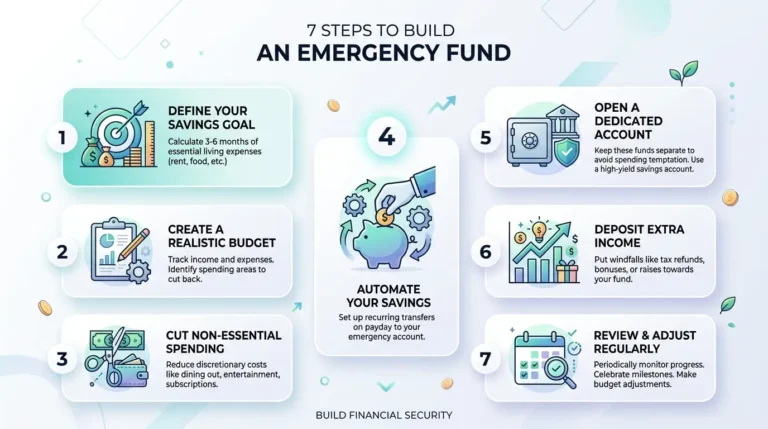
- If you haven’t built an emergency fund (3-6 months of expenses)
- If your mortgage rate is below 4% (you might earn more investing the money)
Bottom line: Get these financial basics covered first, then attack your mortgage.
How to Set Up Extra Payments
Contact your lender to ensure they apply overpayments correctly. You must specify that extra money goes toward principal (not future payments). Most lenders offer online portals where you can easily set up additional principal payments. Keep records, and check statements to confirm the reduced balance.
Frequently Asked Questions
Will I get taxed on my mortgage interest savings?
No. You’re simply paying less interest to your lender. The IRS doesn’t consider avoided expenses as taxable income.
Can I stop making extra payments if money gets tight?
Absolutely. Unlike refinancing, there’s no commitment. Skip months when needed without penalty.
Do extra payments lower my monthly bill?
No, your required payment stays the same. But you’ll pay less total interest and own your home sooner.
Are there prepayment penalties?
Most modern mortgages don’t have them, but check your paperwork. By 2026, only 2% of US mortgages include such clauses.
Now’s the time to act. Every month you delay costs money. Pick one strategy from this article and implement it with your next mortgage payment. Whether it’s rounding up, going biweekly, or making occasional lump sums, you’ll be shocked how fast the savings add up. Your future self will thank you when you own your home outright years ahead of schedule.