
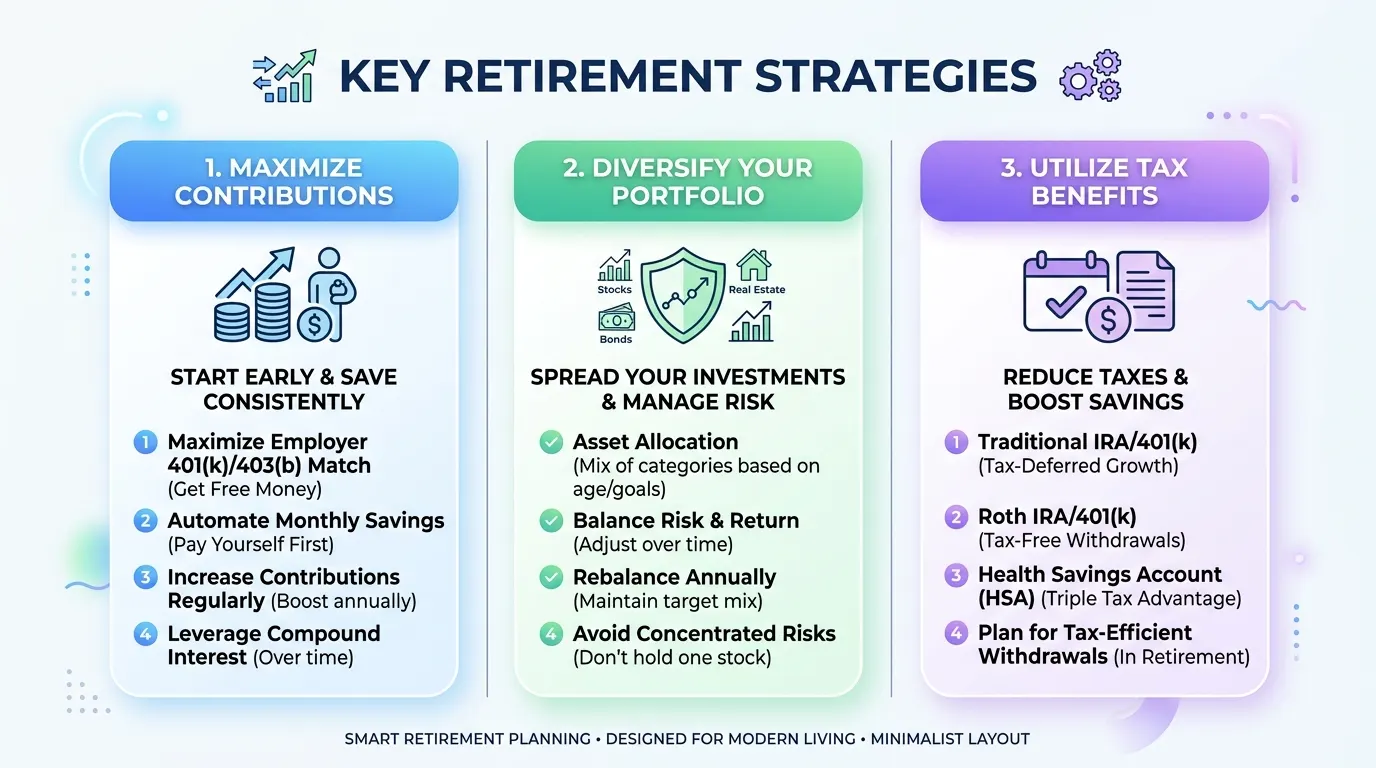
Maximize Your 2026 Retirement Plan
Table of Contents
- Understanding Your 2026 Retirement Plan Options
- Leveraging Employer-Sponsored Plans for Your 2026 Retirement Plan
- Maximizing Individual Retirement Accounts (IRAs)
- Smart Investment Strategies for Your 2026 Retirement Plan
- The Power of Catch-Up Contributions
- Considering Alternative Investment Vehicles
- Reviewing and Adjusting Your 2026 Retirement Plan
- Practical Tips to Maximize Retirement Savings 2026 Strategies
- Step-by-Step Action Plan for Your 2026 Retirement Plan
- Conclusion: Secure Your Future with a Strong 2026 Retirement Plan
- FAQ on Your 2026 Retirement Plan
How to maximize your 2026 retirement plan is a critical financial goal for many individuals. Indeed, securing your financial future requires diligent planning and strategic execution. Therefore, understanding the various avenues available and optimizing your contributions are key steps. This comprehensive guide will help you navigate the landscape of retirement savings, especially as we look towards 2026. Therefore, let’s explore effective strategies to boost your nest egg. By implementing these tips, you can significantly enhance your financial security in retirement.
Understanding Your 2026 Retirement Plan Options
Firstly, identifying the types of retirement accounts is fundamental for any 2026 retirement plan. Various vehicles like 401(k)s, IRAs, andRoth accounts offer different benefits. Each account type has unique contribution limits and tax implications. Consequently, choosing the right mix can significantly impact your long-term growth. Furthermore, understanding the nuances of each plan is essential for effective planning.
Exploring Employer-Sponsored Plans
Employer-sponsored plans, such as 401(k)s and 403(b)s, are cornerstones for many. They often come with employer matching contributions. Thus, contributing enough to get the full match is essentially free money. Neglecting this opportunity means leaving potential growth on the table. Moreover, these plans generally offer higher contribution limits than individual accounts. Therefore, these plans are a vital component of any robust 2026 retirement plan.
Individual Retirement Accounts Defined
Individual Retirement Accounts (IRAs) offer flexibility and various investment options. Both Traditional and Roth IRAs provide distinct tax advantages. Traditional IRAs allow pre-tax contributions and tax-deferred growth. Roth IRAs, conversely, offer tax-free withdrawals in retirement. Your income level and financial situation will dictate which type of IRA is most suitable. Thus, a careful evaluation is necessary for your 2026 retirement plan.
Leveraging Employer-Sponsored Plans for Your 2026 Retirement Plan
Maximizing employer-sponsored plans is one of the most effective maximize retirement savings 2026 strategies. These plans provide a powerful avenue for retirement wealth accumulation. Understanding their features can greatly benefit your financial future.
Maximizing Your 401(k) Contributions
The 401(k) contribution limits are typically adjusted annually. For 2026, it is crucial to stay informed about these potential changes. Aim to contribute the maximum amount allowable each year. This aggressive approach helps accelerate your savings growth. Furthermore, contributing early in the year can maximize compounding returns. Therefore, this is a prime method to enhance your 2026 retirement plan.
Seizing Employer Matching Contributions
Employer matching is a powerful benefit. Many companies match a percentage of your contributions up to a certain limit. Failing to contribute enough to receive the full match is a common mistake. This is essentially guaranteed return on your investment. Review your plan’s specifics and ensure you are maximizing this benefit. Therefore, make sure this is a priority in your 2026 retirement plan.
Maximizing Individual Retirement Accounts (IRAs)
Beyond employer plans, IRAs offer additional avenues to strengthen your 2026 retirement plan. They provide flexibility and control over your investments. These accounts are a key part of many successful maximize retirement savings 2026 strategies.
Traditional vs. Roth IRA: Which is Right for You?
The choice between a Traditional IRA and a Roth IRA depends on your current and projected tax situation. Traditional IRA contributions might be tax-deductible, reducing your taxable income now. Roth IRA contributions are made with after-tax money, but withdrawals in retirement are tax-free. Consider your expected income in retirement when making this decision. Furthermore, consult a financial advisor for personalized guidance. This choice significantly impacts your 2026 retirement plan.
Navigating IRA Contribution Limits
IRA contribution limits are also subject to annual adjustments. It is important to know the precise limits for 2026. Consistent, maximum contributions can significantly boost your savings. Even small monthly contributions add up over time. Therefore, make sure to stay updated on these figures for your 2026 retirement plan. Further details on IRAs are available on Wikipedia.
Smart Investment Strategies for Your 2026 Retirement Plan
Selecting the right investments within your retirement accounts is just as important as contributing. A well-diversified portfolio is crucial. It helps manage risk while pursuing growth opportunities.
Diversification and Asset Allocation
Diversification is key to mitigating risk. Do not put all your eggs in one basket. Allocate your investments across different asset classes. These include stocks, bonds, and real estate. Your asset allocation should align with your risk tolerance and time horizon. Rebalance your portfolio periodically to maintain your desired allocation. This proactive approach benefits your 2026 retirement plan.
Understanding Risk Tolerance and Time Horizon
Your risk tolerance determines how much market fluctuation you can withstand. Your time horizon is the number of years until you plan to retire. Younger investors with longer time horizons can typically afford to take on more risk. As you approach retirement, a more conservative approach might be suitable. Adjust your investment strategy accordingly. Therefore, this ensures a resilient 2026 retirement plan.
The Power of Catch-Up Contributions
For those aged 50 and over, catch-up contributions present a significant opportunity. These provisions allow older workers to contribute extra amounts annually. This can dramatically boost your 2026 retirement plan in a shorter timeframe.
Eligibility and Limits for Catch-Up Contributions
If you are 50 or older, you are eligible for catch-up contributions. Both 401(k)s and IRAs offer these additional contribution allowances. The exact limits are periodically adjusted. Make sure to factor these amounts into your annual savings strategy. This is a powerful tool to maximize retirement savings 2026 strategies. Consult free financial calculators to see the impact.
Accelerating Your Savings Near Retirement
Catch-up contributions are especially beneficial if you started saving later in life. They provide an opportunity to make up for lost time. Even if you have been saving consistently, they can further accelerate your progress. Consider making these contributions a priority. This strategic move directly strengthens your 2026 retirement plan.
Considering Alternative Investment Vehicles
While 401(k)s and IRAs are primary, other investment options can complement your 2026 retirement plan. These can provide additional diversification and growth potential.
Health Savings Accounts (HSAs) as Retirement Tool
HSAs offer a triple tax advantage: tax-deductible contributions, tax-free growth, and tax-free withdrawals for qualified medical expenses. If you have a high-deductible health plan, an HSA can be a powerful savings tool. Often, people use HSAs to cover healthcare costs in retirement. This can significantly reduce financial strain later on. Thus, it is a smart component of your 2026 retirement plan.
Taxable Brokerage Accounts for Extra Savings
For those who have maxed out their tax-advantaged accounts, a taxable brokerage account is an option. While lacking tax benefits, these accounts offer unlimited contribution amounts. They provide liquidity and control over your investments. They can also hold a wide range of assets. Therefore, they serve as a flexible backup for your 2026 retirement plan. Learn more about brokerage accounts on Wikipedia.
Reviewing and Adjusting Your 2026 Retirement Plan
A retirement plan is not a static document. Regular review and adjustment are crucial. Market conditions change, and your personal circumstances evolve. Therefore, a flexible approach is necessary.
Annual Portfolio Check-Ups
Schedule an annual review of your investment portfolio. Assess its performance against your goals. Ensure your asset allocation remains appropriate for your risk tolerance. Rebalance as needed to stay on track. This proactive management helps protect your 2026 retirement plan from unexpected shocks.
Adapting to Life Changes
Major life events, such as marriage, divorce, or a new job, can impact your retirement goals. Adjust your contribution amounts or investment strategy accordingly. Update your beneficiaries regularly. Staying flexible ensures your 2026 retirement plan remains aligned with your current life situation. This adaptability is a core maximize retirement savings 2026 strategies.
Practical Tips to Maximize Retirement Savings 2026 Strategies
Here are some actionable tips to ensure your 2026 retirement plan is as robust as possible. These strategies focus on proactive steps and ongoing optimization.
- Start Early: The sooner you begin saving, the more time your money has to compound.
- Automate Savings: Set up automatic transfers to your retirement accounts. This ensures consistent contributions.
- Increase Contributions Annually: Even a small percentage increase each year can make a big difference. Try to align with salary raises.
- Minimize Debt: High-interest debt can hinder your ability to save. Prioritize paying it down.
- Utilize Tax Advantages: Maximize contributions to tax-advantaged accounts first.
- Educate Yourself: Continuously learn about investment strategies and market trends.
By integrating these habits, you can significantly enhance your 2026 retirement plan. These are proven maximize retirement savings 2026 strategies.
Retirement Account Comparison for Your 2026 Retirement Plan
Here’s a quick comparison of key retirement vehicles:
| Feature | 401(k) / 403(b) | Traditional IRA | Roth IRA | HSA |
|---|---|---|---|---|
| Eligibility | Employer-sponsored | Income limits apply | Income limits apply | High-deductible health plan |
| Contributions | Pre-tax | Pre-tax (often deductible) | After-tax | Pre-tax (deductible) |
| Growth | Tax-deferred | Tax-deferred | Tax-free | Tax-free |
| Withdrawals (Qualified) | Taxable in retirement | Taxable in retirement | Tax-free in retirement | Tax-free for medical expenses |
| Catch-Up (50+) | Yes | Yes | Yes | N/A |
| Employer Match | Often available | No | No | Sometimes available |
Step-by-Step Action Plan for Your 2026 Retirement Plan
Developing a structured action plan is crucial. This helps you track progress and make informed decisions. Follow these steps to fortify your 2026 retirement plan.
Step 1: Assess Your Current Financial Situation
- Calculate your net worth.
- Determine your current income and expenses.
- Review existing retirement accounts and balances.
- Establish clear retirement goals (e.g., desired retirement age, annual income).
Step 2: Optimize Current Contributions
- Contribute enough to your 401(k) to get the full employer match.
- Maximize your 401(k) contribution up to the 2026 limits.
- Allocate funds to an IRA (Traditional or Roth) up to its 2026 limits.
- If 50 or older, utilize catch-up contributions for both 401(k) and IRA.
Step 3: Diversify and Invest Wisely
- Review your asset allocation based on your risk tolerance.
- Diversify investments across various asset classes periodically.
- Consider low-cost index funds or ETFs.
- Rebalance your portfolio at least once a year.
Step 4: Explore Additional Savings Avenues
- Contribute to an HSA if eligible and maximize its potential.
- Consider a taxable brokerage account for excess savings.
- Explore other investment options like real estate or annuities if suitable.
Step 5: Regular Review and Adjustment
- Schedule annual financial check-ups.
- Adjust your plan for major life events.
- Stay informed about changes in tax laws and contribution limits for 2026.
- Consult with a financial advisor for personalized advice. Visit Finances Newsfor more articles.
Conclusion: Secure Your Future with a Strong 2026 Retirement Plan
Building a robust 2026 retirement plan demands consistent effort and strategic decisions. By understanding your options, maximizing contributions, and investing wisely, you can achieve your financial goals. Remember, starting early and maintaining discipline are crucial. Review your plan regularly and adapt to changes. These maximize retirement savings 2026 strategies will pave the way for a comfortable retirement. Your future self will thank you for these proactive steps. For more insights on financial planning, explore our car and auto finance guides.
FAQ on Your 2026 Retirement Plan
What are the key steps to start a 2026 retirement plan?
To start a 2026 retirement plan, first assess your current financial status, then choose the right accounts (401(k), IRA), and finally, automate your contributions. Consider employer matches as free money for your 2026 retirement plan.
How much should I contribute to my 2026 retirement plan?
Aim to contribute at least enough to receive your employer’s full match. Ideally, try to maximize your 401(k) and IRA contributions up to the annual limits for your 2026 retirement plan. The more you save early, the better.
Can I have both a 401(k) and an IRA for my 2026 retirement plan?
Yes, absolutely. Having both a 401(k) and an IRA allows you to maximize your tax-advantaged savings and diversify your investment options for your 2026 retirement plan.
What are catch-up contributions for a 2026 retirement plan?
Catch-up contributions allow individuals aged 50 and older to contribute additional amounts to their 401(k)s and IRAs beyond the standard limits. This is a powerful way to boost your 2026 retirement plan closer to retirement.
How do I adjust my 2026 retirement plan over time?
Regularly review your portfolio (at least annually) and rebalance your asset allocation. Adjust your contribution amounts and investment strategy to reflect major life changes or evolving financial goals for your 2026 retirement plan.