Full Coverage vs. Liability Insurance Guide 2026
Table of Contents
- Understanding the Core Differences: Full Coverage vs. Liability Insurance
- Question 1: What is Your Vehicle’s Current Value and Age?
- Question 2: What is Your Financial Risk Tolerance and Emergency Fund Status?
- Question 3: Are You Subject to Lender Requirements, and What State Laws Apply?
- Question 4: What is Your Driving Record and Exposure to Risk?
- Question 5: How Much Can You Realistically Afford for Premiums and Deductibles?
- Real-World Scenario: Mark’s Dilemma with Full Coverage vs. Liability
- Beyond the Basics: Other Factors Influencing Your Choice
- Making Your Decision: Full Coverage vs. Liability Insurance
- Frequently Asked Questions About Car Insurance
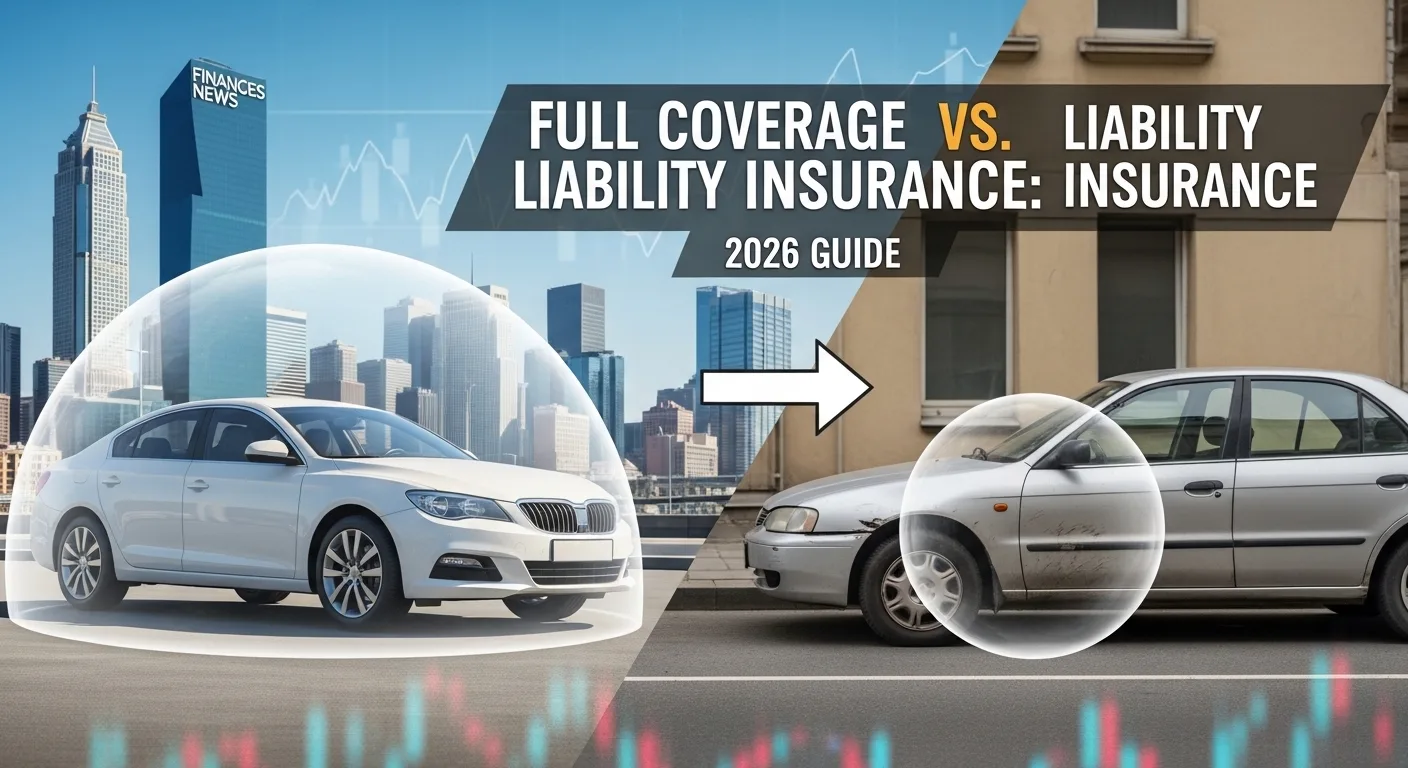
Choosing between **full coverage vs liability insurance** is one of the most critical decisions you’ll make as a car owner, directly impacting your financial well-being after an accident. This choice isn’t just about saving money on monthly premiums; it’s about protecting your assets, ensuring peace of mind, and avoiding potentially ruinous out-of-pocket expenses. By asking the right questions, you can save thousands of dollars and ensure you have the appropriate protection for your specific circumstances.
Let’s delve into the five imperative questions you must ask yourself before making this pivotal insurance decision.
Understanding the Core Differences: Full Coverage vs. Liability Insurance
Before diving into the questions, it’s essential to grasp the fundamental distinctions between what people commonly refer to as “full coverage” and liability insurance.
**Liability Insurance:** This is the legal minimum in most states. It covers damages *you cause* to other people or their property in an at-fault accident. It typically includes:
- **Bodily Injury Liability:** Pays for medical expenses, lost wages, and pain/suffering for people injured in an accident you cause.
- **Property Damage Liability:** Pays for repairs or replacement of property you damage (e.g., another car, a fence, a building).
**”Full Coverage” Insurance:** This isn’t a single policy but a combination of several coverages that protect *your* vehicle and *your* injuries, regardless of fault. It typically includes:
- **Liability Insurance:** As described above.
- **Collision Coverage:** Pays for damage to your car resulting from a collision with another vehicle or object (e.g., a tree, a pole), regardless of who is at fault.
- **Comprehensive Coverage:** Pays for damage to your car not caused by a collision, such as theft, vandalism, fire, natural disasters (hail, floods), or hitting an animal.
- Often also includes: Uninsured/Underinsured Motorist Coverage, Medical Payments (MedPay) or Personal Injury Protection (PIP), and sometimes Roadside Assistance or Rental Car Reimbursement.
Understanding these basic components is the first step towards an informed decision about **full coverage vs liability insurance**.
Question 1: What is Your Vehicle’s Current Value and Age?
This is perhaps the most straightforward financial consideration. The value of your car directly impacts the financial benefit of collision and comprehensive coverage.
* **High Value/Newer Vehicle:** If your car is new or relatively new, and its market value is significant, full coverage is almost always advisable. If you total a new car with only liability insurance, you’d be solely responsible for replacing it. The cost of comprehensive and collision coverage becomes a worthwhile investment to protect that asset.
* **Low Value/Older Vehicle:** For older cars with low market value (e.g., under $3,000-$5,000), the cost of full coverage often outweighs the potential payout. If your car is totaled, the insurance company will only pay out its actual cash value (ACV) at the time of the loss, minus your deductible. If annual premiums for full coverage are $800, and your car is worth $2,500 with a $500 deductible, you’re paying a substantial chunk of its value each year for potentially minimal return.
* **Actionable Tip:** Use online tools like Kelley Blue Book (KBB) or Edmunds to get an accurate estimate of your car’s private party sale value and trade-in value. If the annual cost of comprehensive and collision premiums approaches or exceeds 10% of your car’s ACV, it might be time to reconsider full coverage.
Comparison: Full Coverage vs. Liability for Vehicle Value
| Vehicle Characteristic | Typical Recommendation | Reasoning |
|---|---|---|
| New/High-Value Car | Full Coverage | Protects significant financial investment; replacement cost is high. |
| Moderately Valued Car | Evaluate carefully (consider age, condition) | Assess premium vs. payout; still potential for substantial loss. |
| Old/Low-Value Car | Liability Only | Cost of full coverage often exceeds car’s actual cash value or potential payout after deductible. |
Question 2: What is Your Financial Risk Tolerance and Emergency Fund Status?
This question delves into your personal financial resilience. Could you afford to replace your vehicle out-of-pocket tomorrow if it were totaled in an accident (that was your fault or a no-fault incident)?
* **High Risk Tolerance/Robust Emergency Fund:** If you have substantial savings — enough to replace your car without incurring financial hardship — you might consider foregoing full coverage, particularly on an older vehicle. You are essentially self-insuring for collision and comprehensive damages.
* **Low Risk Tolerance/Limited Emergency Fund:** If the sudden loss of your vehicle would create a significant financial burden, full coverage is almost certainly the safer option. It acts as a crucial safety net, preventing you from having to take out high-interest loans or deplete your savings to get back on the road. Remember, even if you’re not at fault, dealing with uninsured motorists or hit-and-runs can leave you personally responsible for damages without collision or comprehensive coverage. This is where adequate planning, possibly using financial calculators to project savings, becomes invaluable.
Question 3: Are You Subject to Lender Requirements, and What State Laws Apply?
This factor is often non-negotiable.
* **Lender Requirements:** If you have a car loan or lease, your lender will almost certainly mandate that you carry full coverage (specifically collision and comprehensive insurance) until the loan is paid off. This protects their asset – the vehicle – which technically doesn’t fully belong to you until it’s paid in full. Failing to maintain this coverage can result in the lender force-placing expensive insurance on your behalf, or even repossessing the vehicle.
* **State Law Minimums:** All states require drivers to carry at least liability insurance. Some states also mandate Uninsured/Underinsured Motorist (UM/UIM) coverage, and a few require Personal Injury Protection (PIP) or Medical Payments (MedPay). It’s crucial to understand your state’s specific minimum requirements. You can check your state’s Department of Motor Vehicles (DMV) or insurance commissioner’s website for the most accurate and up-to-date information. For example, the National Association of Insurance Commissioners (NAIC) offers state-by-state guides to minimum car insurance requirements.
Question 4: What is Your Driving Record and Exposure to Risk?
Your driving habits and environmental factors play a significant role in determining the likelihood of needing comprehensive or collision coverage.
* **Driving Record:** A history of accidents or traffic violations (even minor ones) suggests a higher risk profile for insurers. While these might increase your premiums for full coverage, they also highlight a greater personal need for protection against self-inflicted damages. Conversely, a pristine driving record might lead you to believe you’re less likely to be at fault, but accidents are often caused by others.
* **Driving Environment:**
* **Urban Areas:** Higher traffic density, more parked cars, increased risk of fender benders, theft, and vandalism. Comprehensive and collision coverage offer more peace of mind here.
* **Rural Areas:** Less traffic, but higher risk of hitting animals (deer, elk) which are covered under comprehensive. Longer commutes might also increase exposure time.
* **Parking Situation:** Do you park in a secure garage, a busy street, or an open lot? Higher exposure to elements and theft increases the value of comprehensive.
* **Commute:** A long, daily commute, especially in heavy traffic, increases your statistical likelihood of being involved in an accident. If you primarily work from home or drive infrequently, your risk may be lower.
Question 5: How Much Can You Realistically Afford for Premiums and Deductibles?
While getting the most comprehensive coverage sounds ideal, it must be balanced against your budget. Understanding the cost breakdown is key to deciding between **full coverage vs liability insurance**.
* **Premiums:** Full coverage will always have higher premiums than liability-only insurance. Obtain multiple quotes from different providers to compare costs. Use online comparison tools or work with an independent insurance agent. Factor these annual costs into your overall budget.
* **Deductibles:** This is the amount you pay out-of-pocket before your insurance kicks in for a collision or comprehensive claim. Higher deductibles lead to lower premiums, and lower deductibles mean higher premiums. Can you comfortably afford your chosen deductible in case of an accident?
* **Example:** If you choose a $1,000 deductible on collision, and your emergency fund only holds $500, a minor accident could still cause significant financial strain. It’s always best to have at least your highest deductible amount readily available in savings. You can explore various car finance strategies to manage these costs effectively.
Real-World Scenario: Mark’s Dilemma with Full Coverage vs. Liability
Consider Mark, a 30-year-old living in a medium-sized city. He drives two vehicles: a 2022 Toyota Camry (valued at $28,000, with an outstanding loan of $20,000) and a 2008 Honda Civic (valued at $3,500, owned outright).
Mark’s Situation:
- **Toyota Camry (Daily Driver):** He uses it for his 45-minute highway commute. His lender requires full coverage. His emergency fund has $5,000.
- **Honda Civic (Weekend Car/Backup):** Used primarily for errands and occasional longer trips, about 100 miles a week.
- **Driving Record:** Clean for the past 5 years.
- **Risk Tolerance:** Moderate. He doesn’t want to replace a car out of pocket if avoidable, but also isn’t keen on overpaying for insurance.
**Applying the 5 Questions to Mark’s Cars:**
1. **Vehicle Value/Age:**
* **Camry:** High value, newer. Full coverage is a must. (Question 1 answered: Yes, full coverage needed).
* **Civic:** Low value, older. Full coverage premium versus potential payout is questionable.
2. **Financial Risk Tolerance/Emergency Fund:**
* Mark has $5,000. He could technically replace the Civic if totaled, but it would deplete most of his emergency fund. Losing the Camry would be catastrophic without insurance.
3. **Lender Requirements/State Laws:**
* **Camry:** Lender requires full coverage. (Question 3 answered for the Camry).
* **Civic:** No lender. Only state liability minimums apply.
4. **Driving Record/Exposure:**
* Clean record helps with premiums. The Camry’s highway commute increases collision risk. The Civic’s less frequent use reduces risk slightly, but it’s still exposed to city parking and potential animal strikes in rural drives.
5. **Affordability:**
* Mark gets quotes. Full coverage for the Civic is $600/year with a $500 deductible. Liability-only is $250/year. He calculates that over 5 years, he would pay $3,000 in premiums for full coverage vs. $1250 for liability. If the Civic is totaled, he’d get max $3,000 ($3,500 ACV – $500 deductible).
**Mark’s Decision:**
* **Toyota Camry:** He secures full coverage as mandated by his lender and wisely protects his significant investment and large outstanding loan.
* **Honda Civic:** After careful consideration of the cost-benefit for **full coverage vs liability insurance**, he opts for liability-only. He decides that the $350 difference in annual premiums for the Civic ($600 – $250) is better saved, directly supplementing his emergency fund. He accepts the risk that if the Civic is totaled in a no-fault incident or an at-fault accident, he will use his emergency savings to replace it or buy a new used car. The potential payout relative to the premiums over time wasn’t compelling enough to justify full coverage for the older car.
This scenario illustrates that the best choice for **full coverage vs liability insurance** isn’t one-size-fits-all, even for the same individual with different vehicles.
Beyond the Basics: Other Factors Influencing Your Choice
While the five questions above form the core of your decision, a few other considerations can fine-tune your insurance choice:
* **Replacement Cost vs. Actual Cash Value (ACV):** Understand what your policy pays out. Most policies pay ACV, meaning depreciated value. Some newer car policies offer replacement cost for the first few years, which can be a significant benefit.
* **Deductible Structure:** Sometimes, a slightly higher deductible on comprehensive and collision can significantly lower your premiums, making full coverage more affordable. However, ensure you can comfortably cover that deductible.
* **Uninsured/Underinsured Motorist (UM/UIM) Coverage:** This is a critical addition. It protects you if an at-fault driver either has no insurance or insufficient insurance to cover your damages and medical bills. While not technically part of “full coverage” in all states, it’s often bundled and highly recommended, even if you opt for liability-only on your own car’s damage.
* **Optional Add-ons:** Consider roadside assistance, rental car reimbursement, and gap insurance (for financed cars where the loan balance exceeds the car’s ACV). These can add value and peace of mind without the full cost of collision/comprehensive.
Making Your Decision: Full Coverage vs. Liability Insurance
Ultimately, the choice between **full coverage vs liability insurance** boils down to balancing cost, risk, and peace of mind. There’s no universal “right” answer; it’s deeply personal and depends on your unique financial situation and vehicle.
By methodically asking these five crucial questions, and considering the additional factors, you empower yourself to make an educated decision that safeguards your finances without overspending. Review your policy annually, especially if your car’s age, value, or your financial situation changes. What was right last year might not be the best choice today.
Remember, the goal is not just to comply with the law, but to protect yourself from potentially devastating financial consequences that even a seemingly minor accident can trigger.
Frequently Asked Questions About Car Insurance
Is “full coverage” a single policy?
No, “full coverage” is a common term referring to a combination of different types of insurance, primarily liability, collision, and comprehensive coverage. It’s not a single policy but a package of coverages that provides broader protection for both your vehicle and others.
When can I drop full coverage and switch to liability-only?
You can typically switch to liability-only insurance once you no longer have a car loan or lease, as lenders usually require full coverage. It’s generally advisable to consider dropping full coverage when the annual cost of comprehensive and collision premiums approaches or exceeds 10% of your car’s actual cash value (ACV), and you have sufficient savings to replace the vehicle out-of-pocket.
Does my credit score affect my car insurance rates?
Yes, in most states, insurance companies use a credit-based insurance score as one factor in determining your premiums. A higher (better) credit score can often lead to lower insurance rates, as it’s statistically correlated with a lower likelihood of filing claims. To learn more about how to improve your score, check out various credit building tips.
What happens if I get into an accident with only liability insurance and it’s my fault?
If you’re at fault in an accident and only carry liability insurance, your policy will cover the damages and injuries to the other party, up to your policy limits. However, any damage to your own vehicle will not be covered by your insurance, and you will be responsible for the full cost of repairs or replacement out-of-pocket.