
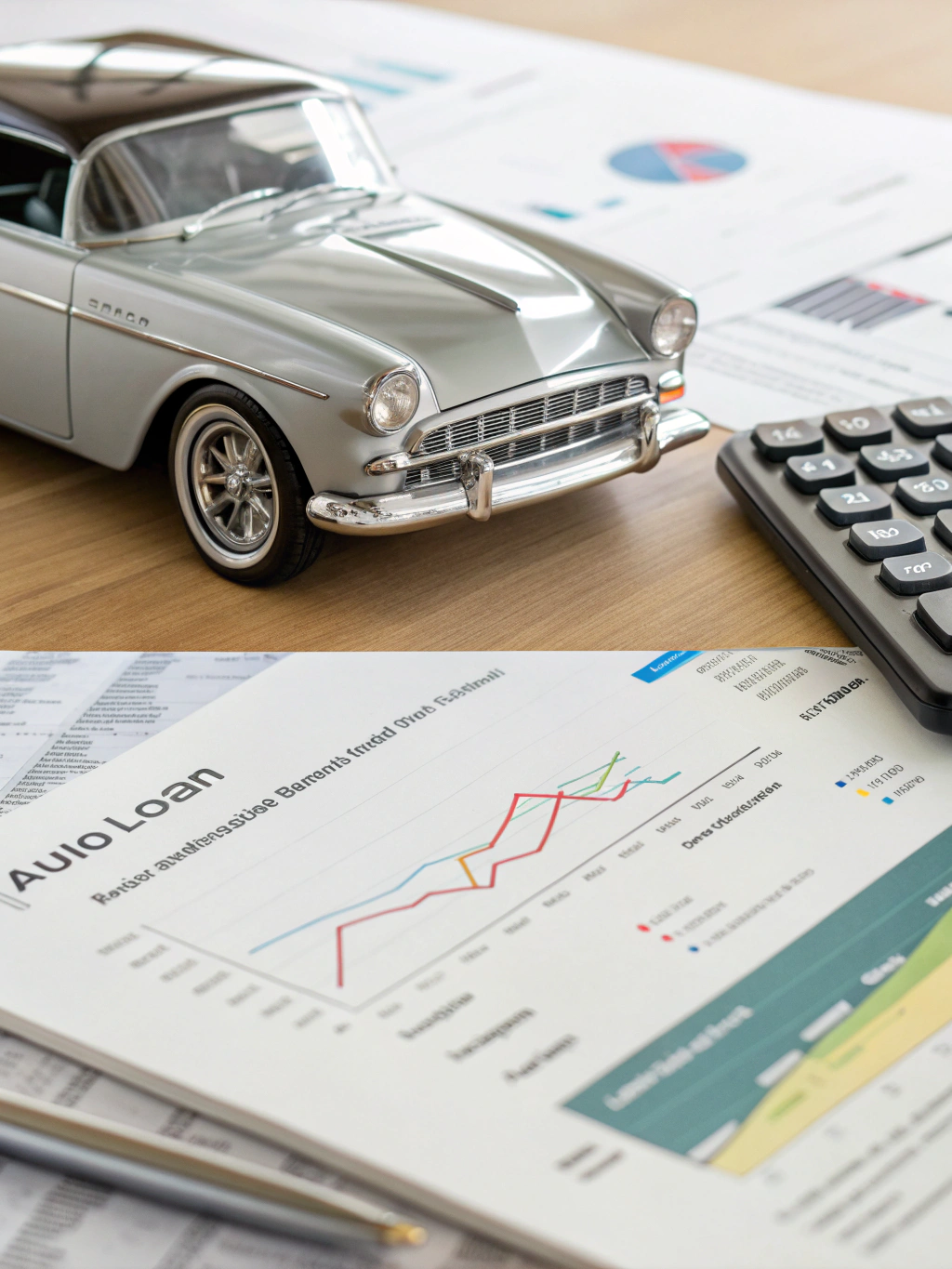
Best Ways to Compare Classic Car and Auto Loan Options
Did you know that approximately 85% of new car buyers finance their vehicles, yet nearly 40% fail to shop around for the best rates before signing? In today’s volatile economic climate, where interest rates have fluctuated dramatically since 2022, understanding how to compare classic car and auto loan options has never been more critical. Whether you’re eyeing a vintage Mustang or a brand-new electric vehicle, navigating auto financing specials can save you thousands of dollars over the life of your loan. The difference between a hasty financing decision and a strategic one often amounts to $3,000-$7,000 in interest payments—money that could fund your retirement account or emergency savings instead. This comprehensive guide will walk you through the essential strategies for evaluating auto financing options, helping you make informed decisions that align with your broader financial goals while taking advantage of competitive auto financing specials available in today’s market.
Table of Contents
Key Financial Concepts
Before diving into loan comparisons, understanding fundamental financing terminology is essential. Annual Percentage Rate (APR) represents the true yearly cost of borrowing, including interest and fees—always compare APRs rather than just interest rates. For example, a loan advertised at 5.5% interest might actually carry a 6.2% APR once origination fees are factored in.
Loan-to-Value Ratio (LTV) determines how much you can borrow relative to the vehicle’s worth. Classic cars often face stricter LTV requirements (typically 80-90%) compared to new vehicles (up to 120% in some cases). A $40,000 classic Corvette might qualify for a maximum $32,000 loan at 80% LTV, requiring an $8,000 down payment.
Secured versus unsecured loans is another critical distinction. Standard auto loans are secured by the vehicle itself, offering lower rates (currently averaging 6.5-8.5% for good credit). Classic car loans, however, sometimes require unsecured personal loans with rates reaching 10-15%, though specialized classic car lenders offer competitive alternatives.
Term length dramatically impacts total cost—a 72-month loan at 7% APR on $30,000 means $4,661 in interest, while the same loan over 48 months costs only $3,024, saving $1,637 despite higher monthly payments.
Economic Trends and Timing
The automotive financing landscape has transformed significantly since the Federal Reserve’s aggressive rate hikes beginning in March 2022. Average new car loan rates jumped from 3.86% in early 2022 to 7.18% by late 2023—an 86% increase that added approximately $1,800 annually to the typical car payment. Meanwhile, the classic car market has experienced unique dynamics, with collector vehicle values growing 18% faster than the S&P 500 over the past decade according to the Historic Automobile Group International (HAGGI) index.
Current economic indicators suggest auto financing specials are becoming increasingly competitive as we move through 2024. Dealerships are offering promotional rates as low as 2.9-4.9% APR on select new vehicles, while credit unions report average rates around 5.5-6.5% for well-qualified borrowers. Classic car specialty lenders now offer rates between 6.5-9.5% depending on vehicle condition and buyer creditworthiness.
The timing consideration extends beyond interest rates. Vehicle depreciation patterns show new cars lose 20-30% of value within the first year, while properly maintained classic cars often appreciate 3-6% annually. This inverse relationship makes financing strategy particularly important.
Step 1 – Gather Current Economic Data
Begin your comparison journey by collecting real-time rate information from multiple sources. Check the Federal Reserve’s consumer credit report (published monthly) for national average rates, providing baseline expectations. Visit at least three credit union websites—they typically offer rates 0.5-1.5% lower than traditional banks and advertise their best auto financing specials prominently.
Utilize online aggregators like Bankrate, LendingTree, and NerdWallet to compare 10-15 lenders simultaneously. These platforms update daily and show rate ranges based on credit score tiers. For classic car financing, consult specialized lenders such as J.J. Best Banc, Woodside Credit, or Hagerty, which understand collector vehicle valuation differently than conventional lenders.
Check the manufacturer’s website if considering a new vehicle—captive finance companies (Ford Credit, Toyota Financial Services, etc.) frequently offer promotional rates substantially below market, sometimes as low as 0% APR for 36-60 months on specific models.
Document the Kelly Blue Book or NADA Guide value for your target vehicle, as this establishes the baseline for LTV calculations and negotiating power.
Step 2 – Evaluate Financial Strategies
With data in hand, create a comparison spreadsheet including APR, term length, monthly payment, total interest paid, and any fees. A $35,000 loan comparison might reveal:
- Credit Union: 6.5% APR, 60 months, $682/month, $5,920 total interest
- Bank: 7.8% APR, 60 months, $704/month, $7,240 total interest
- Dealer Special: 4.9% APR, 60 months, $659/month, $4,540 total interest
This $2,700 spread between best and worst options demonstrates why comparison shopping is financially imperative.
Consider opportunity cost analysis—if choosing a longer term reduces monthly payments by $150, could investing that difference yield better returns? At 8% annual market returns, investing $150 monthly over 72 months grows to $13,478, potentially offsetting higher interest costs on longer-term loans.
Evaluate whether refinancing makes sense. If you financed at 8% two years ago but now qualify for 6%, refinancing a $25,000 balance could save $1,200-$1,800 over the remaining term.
Economic Data and Analytics
Current Federal Reserve data (Q1 2024) shows total outstanding auto loan debt at $1.62 trillion, with delinquency rates climbing to 3.2% from 2.4% pre-pandemic—indicating tighter lending standards ahead. The average new vehicle transaction price remains elevated at $47,936, while used vehicles average $27,442, both approximately 25% higher than 2019 levels.
Credit score significantly impacts rates. Experian’s 2024 State of Automotive Finance reports average APRs by credit tier:
- Super Prime (781-850): 5.61%
- Prime (661-780): 7.48%
- Subprime (501-600): 11.86%
- Deep Subprime (300-500): 14.39%
This demonstrates that a 100-point credit score improvement can save $2,500-$4,000 on a typical five-year auto loan.
Classic car market analytics show vehicles from the 1960s-1970s muscle car era appreciating at 4.8% annually, while 1980s-1990s vehicles are emerging as value opportunities with 7.2% annual growth. Financing an appreciating asset fundamentally changes the cost-benefit analysis compared to depreciating new vehicles.
Financial Alternatives and Risk Management
Beyond traditional financing, consider these alternatives for managing risk and costs:
Home Equity Lines of Credit (HELOCs) currently offer rates around 8.5-9.5% but provide tax-deductible interest if used for home improvements. Some owners strategically finance vehicle purchases this way, though this converts unsecured debt to secured debt against your home—a significant risk.
0% Credit Card Balance Transfers work for smaller purchases or down payments. Cards offering 15-21 months interest-free can finance $10,000-$15,000 if you can repay before the promotional period ends, avoiding 18-25% ongoing APRs.
Lease-to-own arrangements for classic cars are emerging through specialty dealers, allowing collectors to “test drive” ownership while building equity, though premiums typically run 15-20% above outright purchase costs.
Cash reserves strategy involves financing even when you could pay cash, keeping liquidity for emergencies or investment opportunities. With auto financing specials sometimes below 3-4%, borrowing costs less than potential investment returns of 7-10% in diversified portfolios.
Gap insurance protects against depreciation risk, especially crucial for new vehicles. Costing $400-$700, it covers the “gap” if your vehicle is totaled and insurance pays only current market value, which may be $5,000-$8,000 below your loan balance in year one.
Investment Tips and Best Practices
Maximize your financing position with these strategic approaches:
Improve credit scores before applying—every 20-point increase can lower your rate by 0.25-0.5%. Pay down credit card balances below 30% utilization, dispute credit report errors, and avoid new credit inquiries for 6 months before applying.
Make larger down payments when possible. Each 10% down reduces your loan amount, lowers LTV risk (qualifying you for better rates), and builds instant equity protection against depreciation.
Choose shorter terms if cash flow allows—the monthly payment difference between 48 and 60 months is typically only 15-18%, but interest savings reach 25-30%.
Schedule payments biweekly instead of monthly. Making half-payments every two weeks results in 13 full payments annually instead of 12, shaving 3-4 years off a 72-month loan and saving thousands in interest.
Negotiate the vehicle price separately from financing. Many dealers advertise attractive auto financing specials but inflate the vehicle price to compensate. Settle on the out-the-door price first, then discuss financing options.
Consider credit union membership—joining costs $5-25 but unlocks consistently lower rates. Many offer membership through alumni associations, employer relationships, or small charitable donations.
Common Mistakes in Finance
Avoid these costly errors that plague 30-40% of car buyers:
Focusing solely on monthly payment while ignoring total cost. Dealers manipulate payments by extending terms—that “affordable” $450 monthly payment might cost $8,000 more over 84 months versus a $550 payment over 48 months.
Failing to read the fine print on promotional rates. That 0% APR often requires excellent credit (750+), prohibits negotiating vehicle price, and may exclude rebates worth $2,000-$4,000. Running the complete math sometimes reveals that 3.9% with $3,000 cash back costs less overall.
Overlooking total ownership costs—insurance, maintenance, fuel, and depreciation often exceed financing costs. A $40,000 luxury vehicle with $2,200 annual insurance costs substantially different from a $40,000 truck with $1,100 insurance, affecting affordability despite identical loan terms.
Accepting dealer financing without comparison—while dealer auto financing specials are sometimes genuinely best, 45% of buyers could save by using pre-approved credit union or bank loans. Always arrive with backup financing approved.
Underestimating classic car costs—maintenance, storage, specialized insurance, and parts for vintage vehicles average $3,000-$6,000 annually. Factor these into affordability calculations beyond just loan payments.
Ignoring prepayment penalties—some loans charge 2-3% of remaining balance for early payoff. This $600-$1,200 fee negates refinancing benefits or bonuses you planned to apply toward principal.
Finance Planning Tips
Integrate auto financing into your broader financial picture:
Follow the 20/4/10 rule—put 20% down, finance for no more than 4 years, and keep total transportation costs (payment, insurance, fuel, maintenance) under 10% of gross income. This formula prevents vehicle expenses from derailing other financial goals.
Build a vehicle replacement fund—contribute the equivalent of depreciation ($150-$300 monthly for most vehicles) to a dedicated savings account. When your car is paid off, this fund enables cash purchases going forward, eliminating financing costs permanently.
Coordinate financing with tax strategy—if self-employed, vehicles over 6,000 pounds may qualify for Section 179 deduction of up to $28,900 in the first year. Financing leverages this tax benefit while preserving cash flow.
Time purchases around life events—financing major purchases before applying for mortgages increases your debt-to-income ratio, potentially disqualifying you or reducing home buying power by $30,000-$50,000.
Maintain emergency reserves—ensure 3-6 months of expenses remain liquid before committing to auto debt. Vehicle emergencies (transmission failure, accidents) cost $2,000-$5,000, and losing transportation can threaten employment.
Review insurance coverage during financing—lenders require comprehensive and collision coverage, costing 40-60% more than liability-only. Shop insurance simultaneously with loans, as the combination affects total monthly commitment.
Conclusion
Comparing classic car and auto loan options requires methodical analysis of interest rates, terms, total costs, and alignment with your broader financial strategy. By leveraging current auto financing specials, improving your credit positioning, and avoiding common mistakes, you can save thousands while enjoying your dream vehicle—whether that’s a pristine 1967 Camaro or a cutting-edge electric sedan. Remember that the cheapest loan isn’t always the best; consider flexibility, prepayment options, and how financing fits within your complete financial picture. Start your comparison today by checking rates from at least five lenders, calculating total costs beyond monthly payments, and ensuring your vehicle purchase advances rather than hinders your long-term wealth-building goals. Ready to explore more financial strategies? Check out our comprehensive guides on investment diversification, retirement planning, and building passive income streams to maximize your financial potential.
FAQs
What credit score do I need for the best auto financing specials?
The most competitive rates typically require scores of 740+, classified as “super prime.” However, meaningful rate improvements begin at 680, and many lenders offer decent terms starting at 620. If your score is below 620, consider waiting 6-12 months while improving credit rather than accepting 12-18% APRs that add $5,000-$10,000 to loan costs.
Are classic car loans different from regular auto loans?
Yes, significantly. Classic car loans often require specialized lenders familiar with collector vehicle valuation, may accept vehicles 25+ years old (traditional lenders typically limit to 7-10 years), and sometimes offer stated-value coverage where you and the lender agree on worth regardless of guidebook values. Terms are often shorter (36-60 months), and rates run 1-3% higher than new car loans.
Should I finance through the dealer or my bank?
Compare both options always. Dealer financing wins approximately 40% of the time when manufacturers subsidize promotional rates, but credit unions and banks often offer better terms for borrowers with good credit. Get pre-approved from your bank or credit union first, then let the dealer beat that offer if they can. This competitive approach saves buyers an average of $800-$1,400.
How much should I put down on an auto loan?
Aim for 20% minimum to avoid being “underwater” (owing more than the vehicle’s worth) immediately after purchase. Larger down payments secure better rates, lower monthly payments, and reduce total interest. However, if promotional auto financing specials offer 0-2% APR, minimize your down payment and invest the difference in higher-returning assets instead.
Can I refinance my auto loan if rates drop?
Absolutely. Auto loan refinancing works like mortgage refinancing—when rates drop 1% or more, or your credit improves significantly, you can refinance the remaining balance to lower rates. Ensure at least 2 years remain on your loan and that the savings exceed any refinancing fees (typically $0-$200). Many borrowers save $1,500-$3,000 through strategic refinancing.
What’s the difference between APR and interest rate?
Interest rate reflects only the cost of borrowing principal, while APR includes interest plus fees (origination, documentation, etc.), showing the true annual borrowing cost. A loan with 6% interest but $1,000 in fees might carry a 6.8% APR. Always compare APRs across offers—this single number reveals the actual cost regardless of how fees are structured.
Why is it important to compare classic car and auto loan before choosing financing?
It’s important to compare classic car and auto loan options because each one has different interest rates, terms, and eligibility rules. Classic car loans usually require appraisals and special insurance, while auto loans offer lower rates and longer repayment periods. Comparing both helps you choose the most cost-effective financing for your needs.





One Comment