
7 Smart Ways Dollar-Cost Averaging Can Boost Your Investment Returns
Table of Contents
- Understanding Dollar-Cost Averaging: The Core Principle
- How Dollar-Cost Averaging Minimizes Market Volatility
- Automating Your Investments with Dollar-Cost Averaging
- Harnessing the Power of Compounding with Dollar-Cost Averaging
- Comparing Dollar-Cost Averaging to Lump-Sum Investing
- Practical Strategies for Implementing Dollar-Cost Averaging
- The Psychological Benefits of Dollar-Cost Averaging
- Boosting Your Dollar-Cost Averaging Investment Returns: A Step-by-Step Guide
- Conclusion: Embrace Dollar-Cost Averaging for Long-Term Success
- FAQ on Dollar-Cost Averaging
Dollar-cost averaging (DCA) is a highly effective investment strategy where you invest a fixed amount of money at regular intervals, regardless of the asset’s price. Consequently, this approach systematically reduces the average cost of your investment over time. By consistently investing, you buy more shares when prices are low and fewer shares when prices are high, which levels out the purchase price and often leads to significantly improved dollar cost averaging investment returns.
Understanding Dollar-Cost Averaging: The Core Principle
Dollar-cost averaging is essentially a disciplined approach to investing. Instead of trying to time the market, which is notoriously difficult, you commit to a schedule. Therefore, you remove emotion from your investment decisions. This method is particularly beneficial for long-term investors aiming to build wealth steadily.
The Mechanism of Dollar-Cost Averaging
When you employ dollar-cost averaging, you are taking advantage of market fluctuations. For instance, if you invest $100 every month, and the stock price drops, your $100 buys more shares. Conversely, if the stock price rises, your $100 buys fewer shares. This methodical approach averages out your purchase cost. Ultimately, this strategy helps to smooth out the ups and downs of the market. Understanding this core mechanism is vital for appreciating how dollar cost averaging can lead to better outcomes.
How Dollar-Cost Averaging Minimizes Market Volatility
Market volatility is a natural part of investing. Consequently, fear and greed often lead investors to make poor decisions, such as selling during downturns or buying at market peaks. However, dollar-cost averaging provides a powerful antidote to these emotional pitfalls.
Reducing Risk with Consistent Contributions
By consistently investing through different market cycles, dollar-cost averaging mitigates the risk of investing a large sum at an unfortunate peak. This strategy spreads out your market entry points. Therefore, the impact of falling prices is actually beneficial because it allows you to accumulate more shares at a lower cost. Over time, this disciplined accumulation contributes positively to your dollar cost averaging investment returns. Think about it: you are effectively buying assets on sale when prices drop.
Automating Your Investments with Dollar-Cost Averaging
One of the most appealing aspects of dollar-cost averaging is its simplicity and potential for automation. Setting up automatic transfers makes investing effortless and ensures consistency.
Setting It and Forgetting It
Many brokerage platforms and financial institutions allow you to schedule regular, automatic investments into your chosen funds or stocks. This eliminates the need for manual intervention. As a result, you are less likely to miss an investment period or be tempted to deviate from your plan. This hands-free approach is excellent for busy individuals. It ensures that your dollar cost averaging strategy remains on track, irrespective of daily market noise. Furthermore, consistent automation fosters discipline, a cornerstone of successful investing.
Harnessing the Power of Compounding with Dollar-Cost Averaging
Compounding is often called the eighth wonder of the world, and dollar-cost averaging plays a crucial role in maximizing its effect. Regular investments, combined with reinvested earnings, can lead to substantial wealth growth over the long term.
Growing Your Wealth Exponentially
With dollar-cost averaging, each investment contributes to your principal, which then generates its own returns. Over decades, these small, consistent investments grow into significant sums. For example, consistently investing in a growth fund can see your portfolio grow exponentially as early returns start earning returns themselves. This compounding effect is particularly noticeable in strategies involving frequent investments. Thus, understanding the synergy between dollar-cost averaging and compounding is key to maximizing dollar cost averaging investment returns. You can quickly see the power of compounding by using free financial calculators to project future growth.
Comparing Dollar-Cost Averaging to Lump-Sum Investing
While dollar-cost averaging offers compelling advantages, it’s essential to compare it with alternative strategies like lump-sum investing. Sometimes, a lump-sum investment can outperform DCA, especially in continuously rising markets.
When DCA Shines Brightest
Studies often show that, historically, lump-sum investing tends to outperform dollar-cost averaging in bull markets. However, this relies on perfect timing, which is extremely rare. For most investors, particularly those without a large sum readily available, dollar-cost averaging is a more practical and less risky approach. It protects against the regret of investing all your money just before a significant market downturn. Therefore, for average investors, particularly those starting, dollar cost averaging is generally superior for managing risk and achieving consistent dollar cost averaging investment returns.
| Month | Market Price Per Share | DCA Investment ($100/month) | DCA Shares Purchased | Lump Sum Investment ($1200) | Lump Sum Shares Purchased | DCA Avg. Cost | Lump Sum Value (End) |
|---|---|---|---|---|---|---|---|
| January | $10 | $100 | 10.00 | $1200 | 120.00 | $10.00 | $1320.00 |
| February | $9 | $100 | 11.11 | – | – | $9.52 | $1188.00 |
| March | $8 | $100 | 12.50 | – | – | $8.92 | $1056.00 |
| April | $7 | $100 | 14.28 | – | – | $8.32 | $924.00 |
| May | $8 | $100 | 12.50 | – | – | $8.26 | $1056.00 |
| June | $9 | $100 | 11.11 | – | – | $8.25 | $1188.00 |
| July | $10 | $100 | 10.00 | – | – | $8.37 | $1320.00 |
| August | $11 | $100 | 9.09 | – | – | $8.54 | $1452.00 |
| September | $12 | $100 | 8.33 | – | – | $8.75 | $1584.00 |
| October | $11 | $100 | 9.09 | – | – | $8.85 | $1452.00 |
| November | $10 | $100 | 10.00 | – | – | $8.93 | $1320.00 |
| December | $11 | $100 | 9.09 | – | – | $9.03 | $1452.00 |
| Total | $1200 | 127.10 | $1200 | 120.00 | |||
| Current Value | $1398.10 | $1320.00 |
As illustrated, even with market fluctuations, dollar-cost averaging can result in a lower average cost per share and a higher total value in this scenario. This demonstrates how impactful dollar cost averaging can be, particularly when focusing on dollar cost averaging investment returns over time.
Practical Strategies for Implementing Dollar-Cost Averaging
Implementing dollar-cost averaging is straightforward, but certain practical strategies can enhance its effectiveness. These strategies involve frequency, asset selection, and consistency.
Determine Your Investment Frequency and Amount
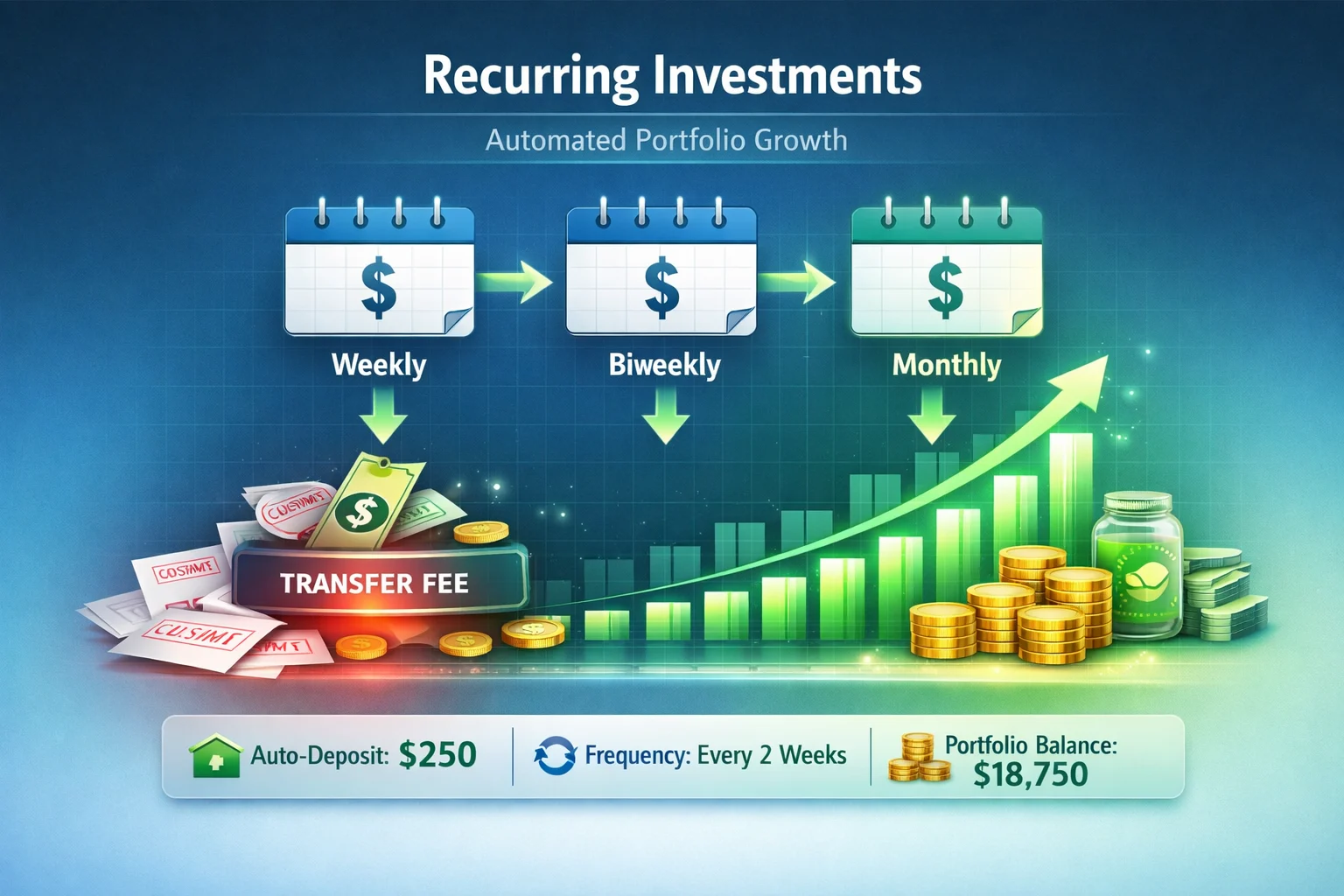
Decide whether you will invest weekly, bi-weekly, or monthly. The more frequent your investments, the better you can average out market fluctuations. For instance, committing $50 per week might be more manageable and effective than $200 per month for some. Your budget and financial goals should guide this decision. Ensure the amount is sustainable, otherwise, you risk disrupting your dollar-cost averaging plan. Many investors find weekly or bi-weekly contributions provide excellent averaging.
Select Appropriate Investments for Dollar-Cost Averaging
Dollar-cost averaging works best with investments that have long-term growth potential and some degree of volatility. Index funds, ETFs, and diversified mutual funds are excellent choices. Individual stocks can also work, but require more research and carry higher risk. For example, broad market index funds are often recommended for their diversification and low costs. Avoid speculative, highly volatile assets with this strategy. Focus on quality assets to maximize dollar cost averaging investment returns over the long haul. Remember, consistent application of dollar cost averaging is the goal.
- Index Funds: Offer broad market exposure and diversification.
- ETFs (Exchange-Traded Funds): Similar to index funds, but trade like stocks.
- Diversified Mutual Funds: Professionally managed portfolios.
- Blue-Chip Stocks: Established companies with a history of stable growth.
The Psychological Benefits of Dollar-Cost Averaging
Beyond the financial advantages, dollar-cost averaging provides significant psychological benefits. Emotions are a major hurdle for many investors.
Reducing Emotional Investing
By automating your investments and sticking to a consistent schedule, you remove the temptation to react to daily market news. Fearing a downturn or being overly optimistic during a boom often leads to bad choices. Dollar-cost averaging, however, encourages a disciplined, long-term perspective. This systematic approach reduces stress and anxiety associated with market swings. Ultimately, it helps you stay focused on your financial goals. This psychological resilience is an understated yet powerful benefit of employing dollar cost averaging.
Boosting Your Dollar-Cost Averaging Investment Returns: A Step-by-Step Guide
To truly maximize your dollar cost averaging investment returns, a structured approach is essential. Here’s a step-by-step action plan.
Step 1: Define Your Investment Goals and Timeline
Before you start, understand why you are investing. Are you saving for retirement, a down payment, or a child’s education? Your goals will influence your risk tolerance and investment choices. For instance, a 30-year retirement plan allows for more aggressive allocation. Clearly defining these elements ensures your dollar cost averaging strategy aligns with your life objectives. This foundational step is critical for long-term success. Defining these goals will also help maintain motivation during market downturns.
- Short-term goals (1-3 years): Consider lower-risk options.
- Medium-term goals (3-10 years): Balance growth with moderate risk.
- Long-term goals (10+ years): Focus on aggressive growth.
Step 2: Choose the Right Investment Vehicle
As mentioned, broad market index funds or ETFs are often ideal for dollar-cost averaging. They offer diversification and generally lower fees than actively managed funds. Research different options available through your brokerage. For example, consider funds tracking the S&P 500 for broad market exposure. The right vehicle will greatly impact your dollar cost averaging investment returns. Don’t forget that fees can erode returns, so choose wisely.
Step 3: Set Up Automatic Transfers
This is arguably the most crucial step for successful dollar-cost averaging. Configure your bank to automatically transfer a fixed amount to your investment account on a regular schedule. Then, set up your brokerage to automatically invest those funds. This removes the decision-making process. This automation ensures consistency, which is the cornerstone of dollar-cost averaging. It’s often referred to as ‘setting it and forgetting it’.
Step 4: Be Consistent and Patient
The success of dollar-cost averaging hinges on consistency and patience. Do not panic during market downturns; instead, view them as opportunities to buy more shares at a lower price. Avoid the temptation to stop investing when the market is volatile. Remember, dollar cost averaging is a long-term strategy designed to smooth out market fluctuations. Patience is a virtue in investing, especially with dollar-cost averaging. Learn more about DCA on Wikipedia to reinforce your understanding.
Step 5: Periodically Rebalance Your Portfolio
Over time, your asset allocation might drift from your target due to differing returns. Periodically rebalance your portfolio (e.g., once a year) to bring it back in line with your desired risk profile. This doesn’t contradict dollar-cost averaging but complements it by ensuring your investments remain appropriate for your goals. Rebalancing helps maintain your intended risk level. This keeps your dollar cost averaging strategy aligned with your overall financial plan, helping to optimize dollar cost averaging investment returns.
Step 6: Increase Contributions as Your Income Grows
As your income increases, try to increase your regular investment contributions. This accelerates the compounding effect and allows you to build wealth faster. Even small increases can make a significant difference over the long run. If your budget allows, prioritize increasing your investment amount. This proactive approach significantly boosts your dollar cost averaging investment returns over a lifetime.
Step 7: Stay Informed but Avoid Overreacting
While you should avoid emotional reactions, staying informed about economic trends and your investments is still important. Read news from reliable sources like Finances News and understand what influences the market. This knowledge helps you make informed decisions during rebalancing or asset selection, without falling prey to short-term market noise. Knowledge empowers better financial choices. For example, understanding global economic shifts can inform your rebalancing decisions without triggering impulsive selling or buying.
Conclusion: Embrace Dollar-Cost Averaging for Long-Term Success
In conclusion, dollar-cost averaging is a powerful, yet simple, investment strategy that can significantly enhance your investment returns over the long term. By removing emotion, minimizing the impact of market volatility, and leveraging the power of compounding, it sets a solid foundation for financial growth. Regardless of your experience level, adopting a disciplined dollar cost averaging approach is a wise decision. Start embracing dollar-cost averaging today to build a more secure financial future. This timeless method is a cornerstone of prudent investing. It offers a clear path to achieving robust dollar cost averaging investment returns.
Explore car and auto finance guides to broaden your financial knowledge. Explore more about investment principles on Wikipedia to deepen your understanding.
What is dollar-cost averaging?
Dollar-cost averaging is an investment strategy where you invest a fixed amount of money at regular intervals, regardless of the asset’s price, to reduce the average purchase cost of an investment. This is the core principle of dollar cost averaging.
How does dollar-cost averaging benefit investors?
Dollar-cost averaging benefits investors by minimizing the impact of market volatility, reducing emotional decision-making, and taking advantage of compounding returns over time. It helps achieve better dollar cost averaging investment returns.
Is dollar-cost averaging suitable for all markets?
Dollar-cost averaging is particularly effective in volatile or declining markets, as it allows investors to buy more shares at lower prices. While it may underperform lump-sum investing in consistently rising markets, it’s a safer strategy for most investors due to its predictability and risk mitigation. It optimizes dollar cost averaging investment returns across various market conditions.
What types of investments work best with dollar-cost averaging?
Broad market index funds, ETFs, diversified mutual funds, and established blue-chip stocks are generally ideal for dollar-cost averaging due to their long-term growth potential and inherent diversification. These choices maximize your dollar cost averaging efforts.
Can I automate my dollar-cost averaging strategy?
Yes, most brokerage platforms and financial institutions allow you to set up automatic, recurring investments, which is a highly recommended practice for successful dollar-cost averaging. This automation ensures consistency and removes emotion from your investment decisions, directly impacting your dollar cost averaging investment returns.