Full Coverage vs. Liability: 7 Key Differences 2026
Table of Contents
- Understanding the Core Distinction: Full Coverage vs. Liability
- Difference 1: Who Gets Covered? Your Car or The Other Guy’s?
- Difference 2: Protection Against Nature and Vandalism
- Difference 3: The Price Tag – A Significant Cost Disparity
- Difference 4: Loan Requirements and Financial Obligations
- Difference 5: Peace of Mind vs. Bare Minimums
- Difference 6: Deductibles – A Key Factor in Claims
- Difference 7: The True Impact on Your Financial Future
- Real-World Scenario: Sarah’s Costly Choice
- Making Your Auto Insurance Comparison: Which Is Right For You?
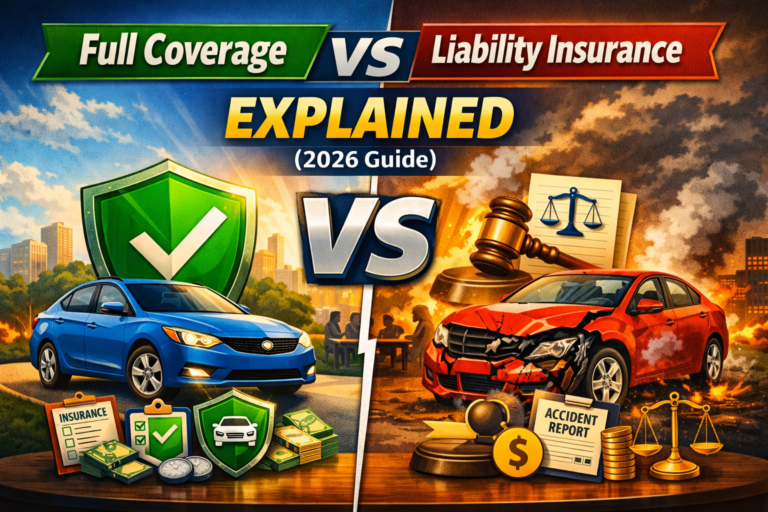
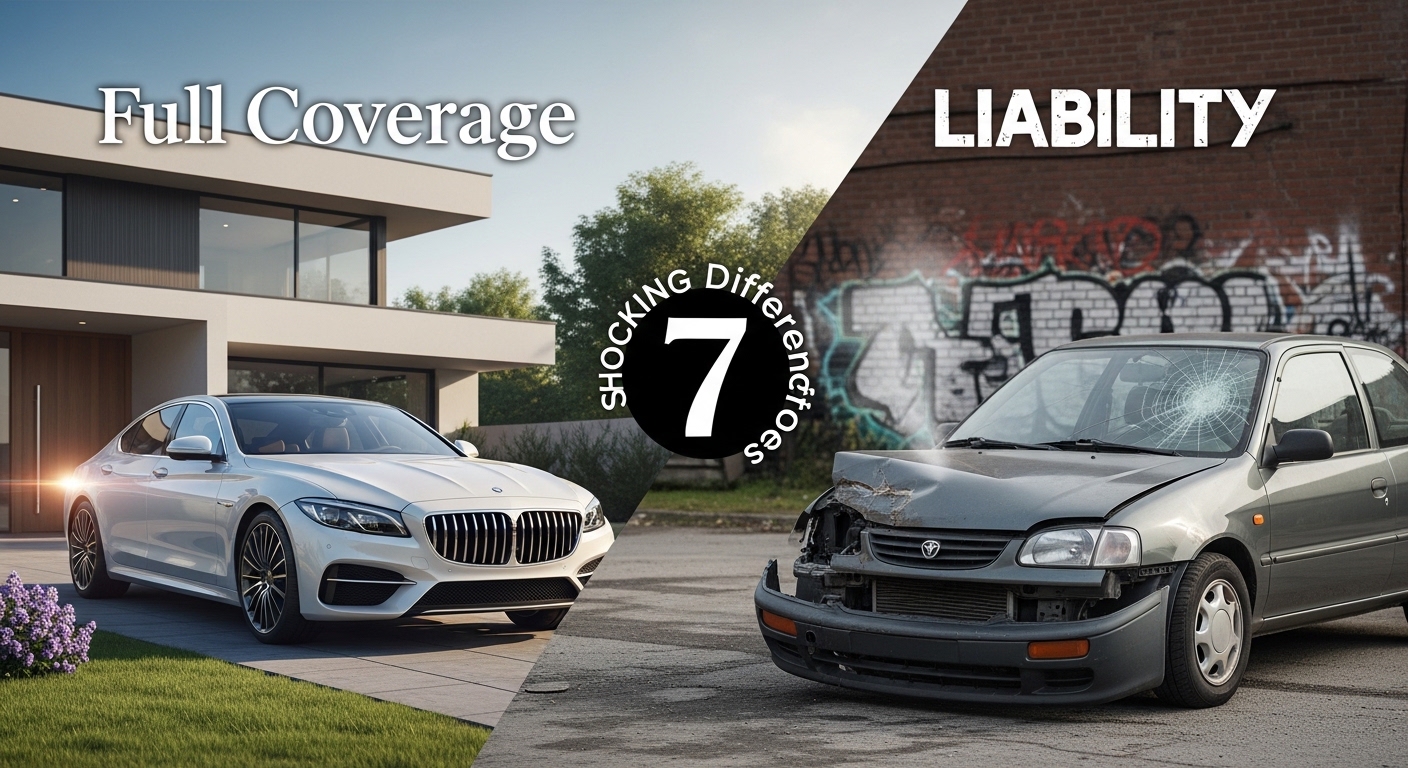
Choosing the right car insurance can feel like navigating a complex maze. Two terms that frequently surface and cause significant confusion are full coverage liability and basic liability-only policies. While both are essential components of your car insurance options, their differences are not just subtle—they’re shocking and can have profound implications for your financial well-being after an accident. This article will dissect seven critical distinctions you absolutely NEED to understand to make an informed decision and protect your assets.
Understanding the Core Distinction: Full Coverage vs. Liability
To truly grasp the disparities, let’s first define our terms. Liability insurance is the fundamental, legally mandated component in most states. It covers damages you are legally responsible for inflicting on others and their property in an at-fault accident. Think of it as protection for the “other guy.”
On the other hand, what’s commonly referred to as “full coverage” isn’t a single policy but rather a package of coverages that typically includes liability, collision, and comprehensive insurance. This combination provides a far more extensive safety net, safeguarding your vehicle and your finances from a much broader array of perils. Understanding these fundamental car insurance options is the first step in any meaningful auto insurance comparison.
Difference 1: Who Gets Covered? Your Car or The Other Guy’s?
This is arguably the most critical difference. With a standard liability-only policy, if you’re at fault in an accident, your insurance will pay for the repairs to the other driver’s car and their medical bills (up to your policy limits). It will not pay for any damage to your vehicle, nor will it cover your medical expenses if you’re injured. This is what many people refer to as minimum coverage.
Conversely, a policy with full coverage liability includes Collision and Comprehensive components. Collision coverage kicks in to repair or replace your vehicle if it’s damaged in an accident, regardless of who is at fault. Comprehensive covers non-collision events like theft, vandalism, fire, or hitting an animal. This distinction is paramount: liability protects others from your actions; full coverage protects you and your vehicle.
Difference 2: Protection Against Nature and Vandalism
Imagine a tree falling on your parked car, or waking up to discover your windows smashed by vandals. If you only carry liability insurance, you’re personally on the hook for every penny of those repairs. Your minimum coverage offers no protection in such scenarios.
This is where the comprehensive portion of full coverage liability becomes invaluable. Comprehensive insurance is specifically designed to cover damage to your vehicle from incidents that aren’t collisions with other vehicles. This includes:
- Theft
- Vandalism
- Fire
- Hail, flood, or other weather-related damage
- Falling objects (like that tree branch)
- “Acts of God”
- Impact with animals
Without it, even if you’re an excellent driver, your car can still be totaled through no fault of your own, leaving you with a significant financial burden.
Difference 3: The Price Tag – A Significant Cost Disparity
There’s no sugarcoating it: full coverage policies almost always cost more than liability-only policies. This is because you’re purchasing a broader range of protections. When doing an auto insurance comparison, the sticker price for minimum coverage will always be lower.
However, focusing solely on the premium can be shortsighted. While you save money upfront with liability-only, the potential out-of-pocket costs after an accident or incident can be astronomical. Consider the value of your vehicle. If your car is worth $20,000 and you total it with only liability insurance, you’ve effectively lost $20,000, plus potentially the cost of a new vehicle.
The higher premiums for full coverage are an investment in financial security. It’s crucial to weigh the immediate savings against the catastrophic financial risk of going without comprehensive protection. Many find car insurance options that include full coverage to be a worthwhile expense when considering overall risk.
Difference 4: Loan Requirements and Financial Obligations
If you have a loan or lease on your vehicle, you generally won’t have a choice between liability and full coverage. Lenders require borrowers to carry full coverage liability on the financed vehicle. This protects their asset (your car) in case it’s damaged beyond repair or stolen before the loan is paid off. These requirements are non-negotiable clauses in your loan agreement.
If you drop full coverage on a financed car, your lender can “force place” insurance on your vehicle. This force-placed insurance is typically significantly more expensive than what you’d purchase on your own, and it only protects the lender’s interest, not yours. This is a crucial consideration for anyone financing a vehicle and understanding their car insurance options.
Difference 5: Peace of Mind vs. Bare Minimums
One of the less tangible but highly significant differences is the level of peace of mind each option offers. With only minimum coverage liability, every time you get behind the wheel, you’re carrying the risk of potentially massive out-of-pocket expenses for your own vehicle’s damage or replacement if something goes wrong. This can create undue stress and anxiety, especially if your car is relatively new or valuable.
A full coverage liability policy provides a robust financial safety net. Knowing that your insurance will likely cover the costs to repair or replace your vehicle, regardless of fault (in the case of collision) or unforeseen events (comprehensive), allows you to drive with greater confidence. This mental comfort is a valuable, often overlooked, benefit when comparing car insurance options.
Difference 6: Deductibles – A Key Factor in Claims
This is a particularly shocking difference for those unfamiliar with policy structures. Liability-only policies typically do not have a deductible. This is because a deductible is the amount you pay out-of-pocket before your insurance company starts paying for *your* claim. Since liability only covers the damage you cause to others, there’s no deductible applied to their claims.
However, with the collision and comprehensive portions of a full coverage liability policy, deductibles are standard. You’ll choose a deductible amount (e.g., $500, $1,000, $2,500) when you purchase the policy. This sum will need to be paid by you if you file a claim for damage to your own vehicle. A higher deductible usually means a lower premium, but a larger out-of-pocket expense if you have an incident. This is a critical factor in any auto insurance comparison, as it directly impacts your immediate financial burden during a claim.
| Feature/Coverage | Liability-Only Insurance | Full Coverage (Liability + Collision + Comprehensive) |
|---|---|---|
| Covers Damage to Your Car? | No (unless other driver is at fault and insured) | Yes (Collision for accidents, Comprehensive for other incidents) |
| Covers Damage to Other Person’s Car? | Yes (Property Damage Liability) | Yes (Property Damage Liability) |
| Covers Other People’s Medical Bills? | Yes (Bodily Injury Liability) | Yes (Bodily Injury Liability) |
| Covers Your Medical Bills? | No (unless optional MedPay or PIP is added) | No (unless optional MedPay or PIP is added) |
| Covers Theft/Vandalism/Weather? | No | Yes (Comprehensive) |
| Required by Lenders? | No | Yes (for financed/leased vehicles) |
| Typically Has a Deductible? | No (for liability claims) | Yes (for Collision & Comprehensive claims) |
| Premium Cost (General Comparison) | Lower | Higher |
Difference 7: The True Impact on Your Financial Future
The final, and perhaps most shocking, difference lies in the potential long-term financial consequences. Choosing minimum coverage liability might save you a few dollars monthly, but it could jeopardize your entire financial future if you’re involved in a serious accident. If you’re at fault and your liability limits are exhausted (which can happen quickly with severe injuries or expensive vehicles), you could be sued for the remaining damages.
A lawsuit can lead to wage garnishment, liens on your property, and even bankruptcy. This risk extends far beyond the immediate vehicle damage. Full coverage liability, with its additional protections, especially when paired with higher liability limits, provides a much stronger shield against these devastating financial outcomes. It’s not just about repairing your car; it’s about protecting your assets, savings, and future earning potential. When considering car insurance options, particularly for higher-value assets or greater personal net worth, this difference becomes critical.
Real-World Scenario: Sarah’s Costly Choice
Let’s consider Sarah, a 28-year-old marketing professional with a new, three-year-old sedan she purchased cash recently. Wanting to save money, she opted for the bare minimum coverage required by her state: liability-only insurance. She reasoned, “I’m a good driver, and my car is paid off, so why pay for full coverage?”
One Tuesday morning, while parked outside her apartment, a delivery truck swerved to avoid a pedestrian and scraped the entire side of her pristine sedan, totaling it. The truck driver was completely at fault, and his insurance paid for Sarah’s vehicle. Sarah was relieved.
A few months later, disaster struck again. A powerful hailstorm ripped through her city. Pellets the size of golf balls hammered her car, leaving hundreds of dents, shattering her panoramic sunroof, and cracking her windshield. The repair estimate came in at $9,500.
Because Sarah only had minimum coverage liability, her policy offered zero protection against acts of nature like hailstorms. The damage wasn’t caused by a collision with another vehicle where she was at fault, nor was it done by another insured driver. Sarah was left completely on her own to cover the $9,500 repair bill, which was a huge dent in her emergency savings. If she had opted for a policy with comprehensive coverage (part of a full coverage package), her insurance would have covered the damage, minus her deductible.
This scenario highlights a critical flaw in relying solely on minimum coverage. Even if you’re an exemplary driver and your vehicle is paid off, unforeseen events can still decimate its value and your financial stability. For Sarah, saving a few hundred dollars a year on premiums ended up costing her nearly ten thousand dollars out of pocket. This underscores the importance of a thorough auto insurance comparison that goes beyond just the premium price, considering all potential risks.
Making Your Auto Insurance Comparison: Which Is Right For You?
The choice between full coverage liability and a liability-only policy isn’t universal. It depends heavily on several factors:
- Vehicle Value: If your car is older and worth very little (e.g., under $3,000-$5,000), the cost of full coverage might outweigh the potential payout.
- Financial Situation: Can you comfortably afford to replace your car out-of-pocket if it’s totaled or stolen? If not, full coverage is likely a must.
- Loan/Lease Status: If your car is financed or leased, full coverage is almost certainly required.
- Driving Habits/Risk Tolerance: While “good drivers” can still be victims, how comfortable are you with assuming significant financial risk?
- State Requirements: Always know your state’s minimum coverage requirements, but remember they are often insufficient.
Conducting a meticulous auto insurance comparison from multiple providers is crucial. Look beyond the initial premium and delve into the specifics of what each car insurance option actually covers. While minimum coverage may seem appealing due to lower immediate costs, the shocking differences in protection offered by comprehensive full coverage liability can be the difference between a minor inconvenience and a financial catastrophe.
Is “full coverage” actually a specific type of insurance?
No, “full coverage” is actually a colloquial term for a combination of different types of auto insurance policies that offer comprehensive protection. It typically includes liability insurance (which covers damage and injuries to others if you’re at fault), collision insurance (which covers damage to your vehicle in an accident, regardless of fault), and comprehensive insurance (which covers non-collision events like theft, vandalism, fire, or natural disasters). It’s not a single policy but rather a robust package of car insurance options.
When should I consider dropping full coverage liability?
You might consider dropping full coverage liability (specifically the collision and comprehensive portions) if your vehicle is older and its market value is significantly less than the cost of your annual premiums plus your deductible. For instance, if your car is only worth $3,000 and your annual full coverage premium is $1,000 with a $500 deductible, paying for an accidental repair for a car of that value might not be financially sensible. Additionally, if you have no loan or lease on the vehicle and have substantial savings to replace the car out-of-pocket if needed, you might consider minimum coverage. However, always carefully evaluate your financial risk tolerance and local driving conditions before making this decision.
Does minimum coverage include uninsured motorist protection?
Not necessarily. While some states mandate Uninsured/Underinsured Motorist (UM/UIM) coverage as part of their minimum requirements, many do not. Even in states where it’s offered, it’s often an additional, optional coverage. Uninsured Motorist coverage protects you if you’re hit by a driver who doesn’t have insurance or not enough insurance to cover your damages. Without it, even if an at-fault driver is identified, you might be left with medical bills and vehicle repair costs that exceed their meager coverage or are entirely uncovered. It’s a critical component to consider when evaluating your car insurance options beyond just the basic liability.
How do deductibles affect my full coverage liability policy?
Deductibles are a crucial element of your full coverage liability policy, specifically for the collision and comprehensive components. A deductible is the amount you agree to pay out-of-pocket for a claim before your insurance company starts paying. For example, if you have a $1,000 deductible on your collision coverage and sustain $4,000 in damages from an accident, you’d pay $1,000, and your insurer would pay the remaining $3,000. Choosing a higher deductible usually results in lower monthly or annual premiums, as you’re taking on more of the initial financial risk. Conversely, a lower deductible means higher premiums but less out-of-pocket expense per claim. It’s an important consideration in your auto insurance comparison, balancing immediate cost savings against potential future claim expenses.