Full Coverage vs Liability Insurance Explained (2026 Guide)
Choosing the right car insurance is one of the most critical financial decisions a vehicle owner will make, yet it’s often shrouded in confusion. The primary dilemma many drivers face is understanding the fundamental differences between liability and full coverage policies. Therefore, making an informed choice is paramount to protecting your assets and ensuring your peace of mind on the road.
This comprehensive guide breaks down everything you need to know about full coverage vs liability insurance explained in clear, simple terms. We will explore what each policy covers, who needs which type, and how to determine the most cost-effective solution for your unique situation. Consequently, you will be empowered to select the perfect level of protection.
- Understanding the Bedrock: What is Liability Car Insurance?
- Decoding “Full Coverage” Car Insurance: What It Really Means
- Full Coverage vs Liability Insurance Explained: A Head-to-Head Breakdown
- Making the Smart Choice: When is Liability Car Insurance Enough?
- The Case for Comprehensive Protection: When to Choose Full Coverage Car Insurance
- Beyond the Basics: Additional Car Insurance Coverages Worth Considering
- Conclusion: Making the Final Decision on Your Auto Policy
- Frequently Asked Questions About Car Insurance
Understanding the Bedrock: What is Liability Car Insurance?
Liability car insurance is the most basic form of auto coverage and is legally required in nearly every state to drive a vehicle. Its primary purpose is simple: to cover the costs of damages and injuries you cause to other people and their property in an at-fault accident. However, it is crucial to understand that it provides zero financial protection for your own vehicle or your own injuries.
Think of liability coverage as your financial shield against lawsuits from others. It’s composed of two main parts that work together to fulfill your legal and financial responsibility to third parties.
Bodily Injury Liability (BI)
Bodily Injury Liability is arguably the most critical component of any auto insurance policy. If you are found at fault in an accident that injures another person, this coverage pays for their medical expenses. Furthermore, it can cover their lost wages if they are unable to work, as well as legal fees if they decide to sue you over the incident.
BI coverage is typically expressed with two limits, such as $25,000/$50,000. The first number is the maximum amount your insurer will pay for a single person’s injuries, and the second is the maximum total amount for all injuries in a single accident. Therefore, selecting adequate limits is vital to protect your personal assets from being seized in a lawsuit.
Property Damage Liability (PD)
Property Damage Liability, the second half of the liability equation, covers the cost to repair or replace another person’s property that you damage in an accident. This most commonly refers to the other driver’s vehicle. However, it also extends to other property, such as mailboxes, fences, guardrails, or even buildings.
This coverage comes with a single limit per accident, for example, $25,000. In an accident where you damage a new luxury vehicle or cause a multi-car pile-up, these costs can escalate quickly. Consequently, carrying only the state minimum PD limit can leave you dangerously underinsured and personally responsible for the remaining balance.
Decoding “Full Coverage” Car Insurance: What It Really Means
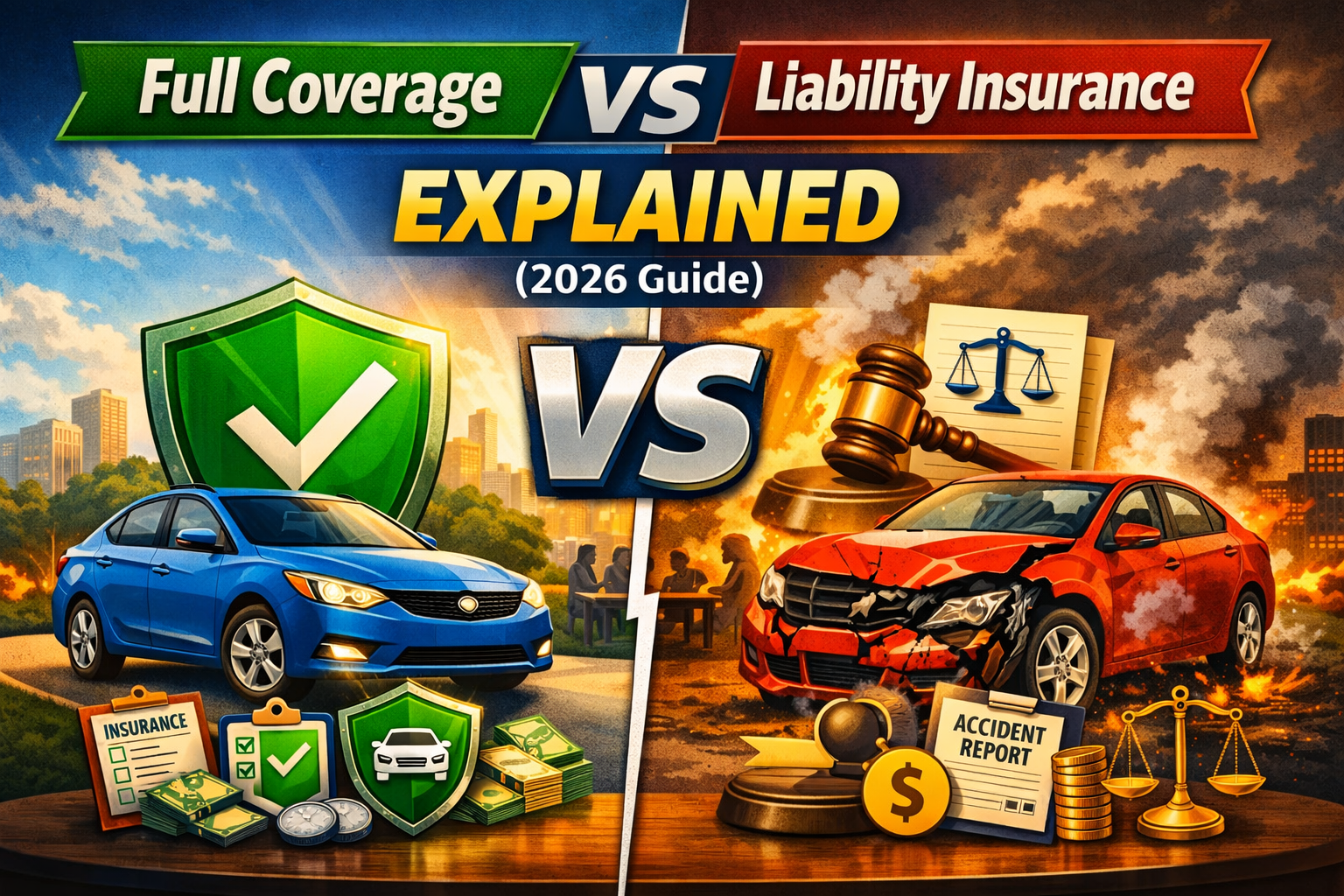
One of the biggest misconceptions in the industry is the term “full coverage car insurance.” Contrary to its name, it is not an official, single policy type, and it certainly does not cover every possible scenario. Instead, “full coverage” is a common industry shorthand for a policy that bundles liability insurance with two additional key coverages: collision and comprehensive.
Essentially, while liability protects others, full coverage extends that protection to your own vehicle. This combination creates a much more robust safety net. Moreover, it is almost always required by lenders if you have a loan or lease on your vehicle, as they need to protect their financial investment.
Collision Coverage Explained
Collision coverage is straightforward: it pays to repair or replace your own vehicle after it’s damaged in a collision with another object. This includes accidents with other cars, as well as single-vehicle accidents like hitting a telephone pole or a guardrail. Importantly, it covers you regardless of who is at fault.
When you file a collision claim, you will first have to pay a deductible, which is the amount you agree to pay out-of-pocket before your insurance kicks in. Deductibles typically range from $250 to $2,000. A higher deductible results in a lower premium, but it means you’ll bear more of the initial cost of a repair. Therefore, you must choose a deductible you can comfortably afford.
Comprehensive Coverage Explained
Comprehensive coverage, sometimes called “other than collision,” protects your vehicle from damage caused by non-collision events. These are often things that are completely out of your control. Additionally, it also covers the outright theft of your vehicle.
Events typically covered by comprehensive insurance include:
- Theft and vandalism
- Fire and explosions
- Weather-related events like hail, floods, and windstorms
- Falling objects, such as tree branches
- Collisions with animals, like deer or birds
Just like collision coverage, comprehensive coverage requires you to pay a deductible before the policy benefits apply. Many drivers choose to have the same deductible amount for both collision and comprehensive for simplicity, but it’s not a requirement.
Full Coverage vs Liability Insurance Explained: A Head-to-Head Breakdown
Now that we have a clear definition of both setups, the ‘full coverage vs liability insurance explained’ debate becomes a matter of direct comparison across key factors. The right choice for your car insurance hinges on understanding these trade-offs and aligning them with your personal and financial circumstances.
Cost Difference
The most significant and immediate difference is the price. Liability-only insurance is substantially cheaper because it offers a very limited scope of protection. On the other hand, full coverage is significantly more expensive because it adds protection for your own vehicle, which can be a high-value asset. Premiums for full coverage can often be two to three times higher than for a liability-only policy on the same car. You can use our free financial calculators to see how this added expense fits into your monthly budget.
Protection for Your Vehicle
This is the core distinction. Liability provides absolutely no coverage for damage to your car. If you cause an accident with a liability-only policy, you are entirely responsible for paying for your own repairs or replacement. Conversely, full coverage is designed specifically for this purpose, paying for repairs after you’ve met your deductible, whether from a collision or a covered non-collision event.
Protection for Others
Both policy types include liability coverage, which is the foundation. Therefore, both a liability-only policy and a full coverage policy will protect you financially (up to your policy limits) from claims made by others for injuries and property damage you cause. However, those with full coverage often opt for higher liability limits for greater asset protection.
When It’s Required
State law only ever mandates liability coverage. However, full coverage becomes a requirement in other situations. If you finance your car with a loan or lease it, your lender or leasing company will contractually obligate you to maintain both collision and comprehensive coverage for the duration of the term. This is non-negotiable, as they need to protect the vehicle as collateral. Our car financing guides explore these requirements in more detail.
Peace of Mind
Ultimately, full coverage provides a greater sense of security. Knowing that your vehicle—often one of your most valuable assets—is protected against a wide array of potential damages can alleviate significant financial anxiety. For many, this peace of mind alone justifies the higher premium.
Making the Smart Choice: When is Liability Car Insurance Enough?
While full coverage offers superior protection, it isn’t always the most financially prudent choice for every driver or every vehicle. There are specific scenarios where opting for a liability-only policy is a logical and cost-effective decision. However, this choice should be made after careful consideration.
One of the primary factors is the car’s value. If you drive an older, paid-off vehicle with a low market value, paying for full coverage might not make sense. A good rule of thumb is to compare the annual cost of full coverage to your car’s Actual Cash Value (ACV). If the premium for full coverage is more than 10% of your car’s value, it may be time to consider dropping it. For example, paying $1,200 a year for full coverage on a car worth only $3,000 is often not a wise investment.
Furthermore, your personal financial health plays a huge role. If you have a robust emergency fund and could comfortably afford to repair your car or even replace it entirely without causing financial hardship, then liability-only coverage might suffice. You are essentially choosing to “self-insure” your own vehicle. This is a risk, but one that can be managed with sufficient savings.
Here’s a simple checklist to help you decide if liability-only is right for you:
- Determine Your Car’s Value: Use resources like Kelley Blue Book or Edmunds to find its current private party value.
- Get Quotes: Contact your insurance agent to get a precise quote for both a liability-only policy and a full coverage policy.
- Assess Your Savings: Look at your emergency fund. Could it cover a major, unexpected car repair bill of several thousand dollars or the full replacement cost of your car?
- Evaluate Your Risk Tolerance: Honestly assess how you would feel financially and emotionally if your car were totaled tomorrow and you received no insurance payout for it.
The Case for Comprehensive Protection: When to Choose Full Coverage Car Insurance
For a large number of drivers, full coverage car insurance is not just a luxury but a necessity. The decision to carry it often comes down to protecting a significant financial investment and mitigating risks that could otherwise be ruinous. Therefore, in many situations, the higher premium is a small price to pay for substantial security.
The most common and non-negotiable reason to have full coverage is if your vehicle is financed or leased. Lenders hold the title to your car until the loan is paid off, and they require you to protect their collateral against damage or loss. Failing to maintain full coverage on a financed vehicle is a breach of your loan agreement and can lead to serious consequences, including forced-placed insurance, which is extremely expensive, or even repossession of the vehicle.
Additionally, if your car is new or has a high market value, full coverage is essential. For most people, a vehicle is the second-largest purchase they’ll make after a home. It simply isn’t financially feasible for the average person to absorb the cost of replacing a $30,000, $40,000, or even more expensive vehicle out-of-pocket. Full coverage ensures that your investment is protected from accidents, theft, and other disasters.
Your personal financial situation is another compelling reason. If you lack a substantial emergency fund, full coverage acts as a critical safety net. An unexpected major accident could lead to a repair bill of thousands or tens of thousands of dollars. Without insurance to cover this, you could face immense debt or the loss of your transportation, which can impact your ability to work. Moreover, a better financial standing, reflected in part by a strong credit history, can lead to lower premiums; check our credit score tips to see how you can improve your score and potentially save on car insurance.
Beyond the Basics: Additional Car Insurance Coverages Worth Considering
While the debate often centers on liability vs. full coverage, a truly comprehensive car insurance policy can be customized with several other important endorsements. These optional coverages can fill critical gaps left by standard policies and provide even greater financial protection and convenience. Understanding them is key to building the right policy for your needs.
One of the most highly recommended add-ons is Uninsured/Underinsured Motorist (UM/UIM) coverage. Despite laws requiring liability insurance, a surprising number of drivers are on the road illegally without any coverage, or with only the bare minimum. If one of these drivers hits you and is at fault, UM/UIM coverage steps in to pay for your medical bills and, in some states, your vehicle repairs, just as the at-fault driver’s insurance should have.
Furthermore, Personal Injury Protection (PIP) or Medical Payments (MedPay) coverage is vital. These cover medical expenses for you and your passengers after an accident, regardless of who is at fault. This is especially valuable as it can provide immediate payment for health insurance deductibles, co-pays, and other out-of-pocket medical costs without waiting for a fault determination.
Other valuable coverages to discuss with your agent include:
- Gap Insurance: If you have a loan on a new car, this is crucial. It covers the “gap” between what you owe on the loan and the car’s depreciated cash value if it’s totaled.
- Rental Reimbursement: This pays for a rental car while your vehicle is being repaired after a covered claim, ensuring you aren’t left without transportation.
- Roadside Assistance: A low-cost add-on that provides services like towing, flat-tire changes, battery jump-starts, and fuel delivery if you’re stranded.
By carefully selecting from these options, you can tailor your car insurance policy to perfectly match your risk exposure and lifestyle, creating a truly robust financial shield.
Conclusion: Making the Final Decision on Your Auto Policy
The choice between full coverage and liability-only car insurance is a deeply personal one, with no single right answer. It requires a careful and honest evaluation of your vehicle’s value, your personal financial situation, and your tolerance for risk. Liability insurance meets your legal obligation and is the budget-friendly choice, but it leaves your own vehicle completely unprotected.
Conversely, full coverage, which combines liability with collision and comprehensive, offers a powerful shield for your automotive asset against a wide variety of perils. While it comes at a higher cost, the peace of mind and financial security it provides are invaluable, especially for those with newer, financed, or high-value vehicles, or for those without a large emergency fund.
Therefore, the best path forward is to assess your individual needs. Analyze your car’s worth, review your savings, and consider the potential financial fallout of a major accident. We recommend getting quotes for both options and discussing additional coverages with your insurance agent. Ultimately, an informed decision today can save you from financial devastation tomorrow, making your choice of car insurance a cornerstone of your financial well-being.
Frequently Asked Questions About car insurance
What is the main difference between liability and full coverage car insurance?
The primary difference is what is covered. Liability car insurance only covers damages and injuries you cause to other people and their property. Full coverage includes that same liability protection but adds collision and comprehensive coverages, which pay for damage to your own vehicle from accidents, theft, weather, and other events.
Do I need full coverage on a car that is paid off?
You are not legally or contractually required to have full coverage on a paid-off car. However, it may still be a wise choice if the car has significant value and you couldn’t afford to repair or replace it out-of-pocket. If the car is older and has a low market value, switching to liability-only could be a smart way to save money on your premium.
How much more expensive is full coverage than liability?
Full coverage is significantly more expensive than liability-only. The exact price difference depends on many factors like your vehicle, driving record, location, and chosen deductible. However, it’s common for a full coverage policy to cost two to four times as much as a state-minimum liability policy for the same driver.
Can I switch from full coverage to liability-only?
Yes, you can switch from full coverage to liability-only at any time, provided you own your car outright (it’s not financed or leased). Simply contact your insurance provider and request the change. They will adjust your policy and premium accordingly, but be sure you fully understand the risks of dropping coverage for your own vehicle before you do so.
Does my state require full coverage car insurance?
No state in the U.S. legally requires drivers to purchase full coverage car insurance. Every state (except New Hampshire, with some caveats) mandates that you carry a minimum level of liability coverage for bodily injury and property damage. Full coverage becomes a requirement only when it’s stipulated in a contract with a lender for a car loan or lease.